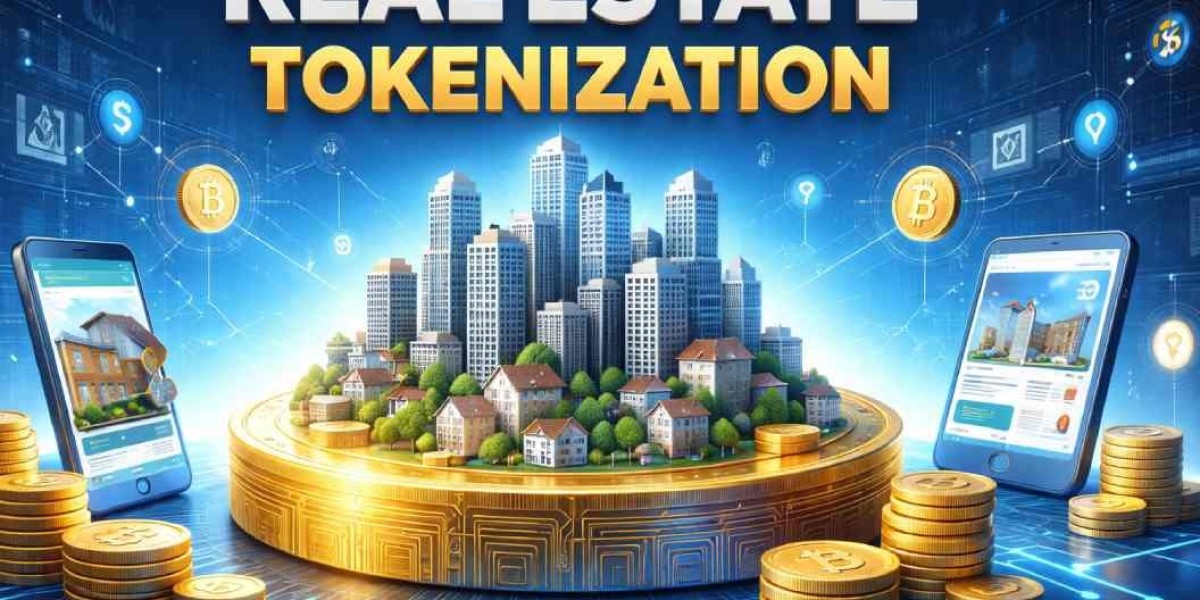

Real estate has long been regarded as one of the most stable and rewarding asset classes. From residential housing to commercial office spaces and industrial warehouses, property investments have consistently attracted institutional investors, high-net-worth individuals, and retail participants. However, despite its appeal, traditional real estate investment has always been associated with significant barriers such as high capital requirements, illiquidity, complex legal processes, and limited accessibility.
The emergence of blockchain technology has introduced a transformative concept known as real estate tokenization. This innovation is reshaping how property assets are owned, traded, and financed. By converting real estate assets into digital tokens on a blockchain, tokenization enables fractional ownership, improves liquidity, enhances transparency, and democratizes access to property investments.
As global financial systems increasingly move toward digitalization, real estate tokenization stands at the intersection of traditional finance and decentralized ecosystems. It is not just a technological trend but a structural shift that has the potential to redefine the future of real estate finance.
Understanding Real Estate Tokenization
Real estate tokenization refers to the process of representing ownership rights in a physical property as digital tokens on a blockchain network. Each token represents a fractional share of the underlying asset, allowing multiple investors to own portions of a property without needing to purchase it outright.
These tokens are typically issued through blockchain-based platforms and are backed by legal frameworks that link digital ownership to real-world assets. Investors can buy, sell, or trade these tokens in a manner similar to stocks or cryptocurrencies, depending on regulatory compliance.
At its core, tokenization involves three key components:
- The underlying real estate asset
- The digital tokens representing ownership
- The blockchain infrastructure that records and manages transactions
This combination creates a more efficient and accessible investment model compared to traditional real estate systems.
The Evolution of Real Estate Finance
Historically, real estate finance has relied on intermediaries such as banks, brokers, and legal institutions. Property transactions often involve lengthy paperwork, due diligence, and regulatory approvals, making the process time-consuming and expensive.
Traditional models also limit participation to investors with significant capital. For example, purchasing a commercial property typically requires large upfront investments, making it inaccessible to smaller investors.
Over time, innovations such as Real Estate Investment Trusts (REITs) attempted to address these challenges by offering indirect exposure to property markets. While REITs improved accessibility, they still operate within centralized frameworks and do not fully eliminate inefficiencies.
Real estate tokenization represents the next phase in this evolution. By leveraging blockchain technology, it removes many of the constraints associated with traditional systems and introduces a more flexible, transparent, and inclusive approach to property investment.
How Real Estate Tokenization Works
The process of tokenizing real estate involves several structured steps:
Asset Identification and Evaluation
A property is selected for tokenization, and its value is assessed through professional appraisal. This ensures that the token price accurately reflects the asset’s market value.
Legal Structuring
A legal entity, often a Special Purpose Vehicle (SPV), is created to hold ownership of the property. Investors purchase tokens representing shares in this entity rather than the property directly.
Token Creation
Digital tokens are generated on a blockchain platform. These tokens represent fractional ownership and can be programmed with specific rights, such as profit sharing or voting privileges.
Smart Contracts Integration
Smart contracts automate processes such as dividend distribution, ownership transfers, and compliance checks. This reduces reliance on intermediaries and increases efficiency.
Token Offering
Tokens are offered to investors through a platform, similar to a digital securities offering. Investors can purchase tokens using fiat or cryptocurrency, depending on the platform.
Secondary Market Trading
Once issued, tokens can be traded on secondary marketplaces, providing liquidity that is traditionally absent in real estate investments.
Key Benefits of Real Estate Tokenization
Enhanced Liquidity
One of the biggest challenges in real estate is illiquidity. Properties cannot be easily sold or divided. Tokenization solves this by enabling fractional ownership and secondary trading, allowing investors to exit positions more easily.
Fractional Ownership
Tokenization allows investors to own a fraction of a property rather than the entire asset. This lowers the entry barrier and opens opportunities for a wider audience.
Global Accessibility
Investors from different parts of the world can participate in tokenized real estate markets without geographical restrictions, subject to regulatory compliance.
Transparency and Security
Blockchain technology ensures that all transactions are recorded on an immutable ledger. This enhances trust and reduces the risk of fraud.
Reduced Costs
By eliminating intermediaries and automating processes through smart contracts, tokenization significantly reduces transaction costs and administrative overhead.
Faster Transactions
Traditional real estate deals can take weeks or months to complete. Tokenized transactions can be executed in a much shorter timeframe.
Challenges and Limitations
Despite its advantages, real estate tokenization faces several challenges:
Regulatory Uncertainty
Different countries have varying regulations regarding digital assets and securities. Compliance remains a complex issue for tokenization platforms.
Legal Framework Integration
Linking digital tokens to real-world property rights requires robust legal structures. Any gaps in this linkage can create risks for investors.
Market Adoption
While interest is growing, tokenized real estate is still in its early stages. Widespread adoption will take time as stakeholders become more familiar with the technology.
Technology Risks
Blockchain systems, while secure, are not immune to vulnerabilities such as smart contract bugs or cyberattacks.
Valuation and Pricing
Accurate valuation of tokenized assets and maintaining price stability in secondary markets can be challenging.
Use Cases of Real Estate Tokenization
Residential Properties
Tokenization allows individuals to invest in residential real estate markets without purchasing entire properties. This is particularly beneficial in high-value urban areas.
Commercial Real Estate
Office buildings, retail spaces, and co-working hubs can be tokenized to attract a broader pool of investors.
Industrial and Logistics Assets
Warehouses and logistics facilities can benefit from tokenization by unlocking capital and improving investment efficiency.
Hospitality Sector
Hotels and resorts can use tokenization to raise funds and offer fractional ownership opportunities.
Real Estate Development Projects
Developers can use tokenization to secure funding for new projects by offering tokens to investors during early stages.
Role of Blockchain in Real Estate Tokenization
Blockchain serves as the backbone of real estate tokenization. Its key features include:
- Decentralization, which reduces reliance on intermediaries
- Immutability, ensuring data integrity
- Transparency, allowing all participants to verify transactions
- Programmability, enabling automated processes through smart contracts
These characteristics make blockchain an ideal technology for transforming real estate finance.
Comparison with Traditional Real Estate Investment
| Feature | Traditional Real Estate | Tokenized Real Estate |
|---|---|---|
| Investment Size | High | Low (fractional) |
| Liquidity | Low | High |
| Transparency | Limited | High |
| Transaction Speed | Slow | Fast |
| Accessibility | Restricted | Global |
| Costs | High | Reduced |
This comparison highlights how tokenization addresses many of the inefficiencies present in conventional systems.
Impact on Investors
Real estate tokenization offers significant advantages for different types of investors:
Retail Investors
Smaller investors gain access to high-value properties that were previously out of reach.
Institutional Investors
Institutions benefit from improved liquidity and portfolio diversification.
Global Investors
Cross-border investments become easier, enabling diversification across regions.
Impact on Property Owners and Developers
Property owners and developers can also benefit from tokenization:
- Access to a broader investor base
- Faster capital raising
- Reduced reliance on traditional financing methods
- Improved asset liquidity
This creates a more flexible and efficient funding environment.
Regulatory Landscape
The regulatory environment for real estate tokenization is evolving. Governments and financial authorities are working to establish frameworks that ensure investor protection while encouraging innovation.
Key regulatory considerations include:
- Classification of tokens as securities
- Compliance with anti-money laundering (AML) laws
- Know Your Customer (KYC) requirements
- Cross-border investment regulations
As regulations become clearer, the adoption of tokenized real estate is expected to accelerate.
Future Trends in Real Estate Tokenization
Integration with Decentralized Finance (DeFi)
Tokenized real estate assets can be used as collateral in decentralized lending platforms, unlocking new financial opportunities.
Increased Institutional Adoption
Large financial institutions are exploring tokenization as a way to modernize asset management.
Interoperability Across Platforms
Future systems may enable seamless transfer of tokens across different blockchain networks.
Tokenized Real Estate Marketplaces
Dedicated platforms for buying, selling, and trading tokenized properties are expected to grow significantly.
AI and Data Analytics Integration
Advanced analytics can improve property valuation, risk assessment, and investment decision-making.
The Role of Smart Contracts
Smart contracts play a crucial role in automating processes within tokenized real estate systems. They enable:
- Automated rent distribution
- Transparent ownership transfers
- Compliance enforcement
- Reduced administrative workload
By minimizing human intervention, smart contracts increase efficiency and reduce errors.
Risks and Considerations for Investors
While tokenization offers many benefits, investors should consider potential risks:
- Regulatory changes
- Platform reliability
- Market volatility
- Legal complexities
Conducting thorough due diligence is essential before investing in tokenized real estate.
Case for Global Adoption
The global real estate market is valued in trillions of dollars, yet a significant portion remains inaccessible to average investors. Tokenization has the potential to unlock this market by:
- Lowering investment barriers
- Enhancing liquidity
- Enabling cross-border participation
As technology matures and regulations evolve, tokenization could become a standard model for real estate finance worldwide.
Conclusion
Real estate tokenization represents a paradigm shift in how property assets are owned, managed, and traded. By combining blockchain technology with real-world assets, it addresses long-standing challenges such as illiquidity, high entry barriers, and lack of transparency.
While there are still hurdles to overcome, including regulatory and technological challenges, the potential benefits far outweigh the limitations. Tokenization is not merely an incremental improvement but a fundamental transformation of real estate finance.
As adoption grows and ecosystems mature, real estate tokenization is poised to play a central role in the future of global investment markets. It offers a more inclusive, efficient, and transparent framework that aligns with the broader trend of digital financial innovation.
In the coming years, the convergence of blockchain, finance, and real estate will likely redefine investment strategies and open new opportunities for participants across the spectrum. Real estate tokenization is no longer a concept of the future it is rapidly becoming a reality shaping the next generation of financial systems.