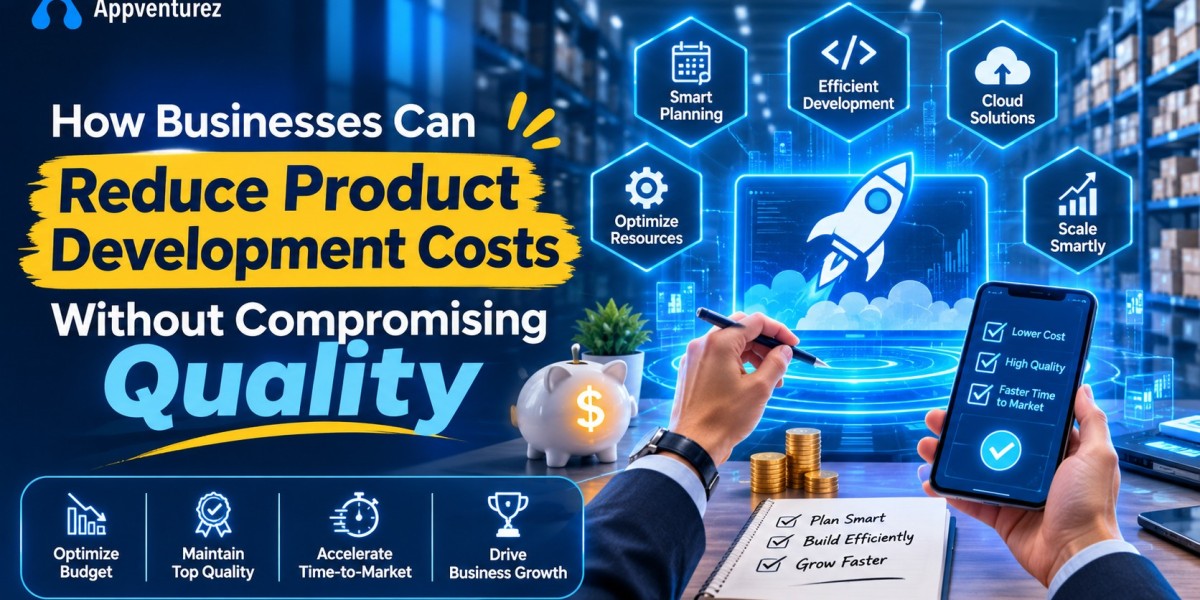

Every product leader knows the squeeze. The budget is fixed, the roadmap is long, competitors are shipping, and someone in finance wants to know why the estimate keeps growing. The usual reaction is to cut: fewer testers, a cheaper vendor, shorter timelines, skipped documentation. And the usual result is a product that costs less to build and far more to own. Bugs reach customers, rework eats the savings, security gaps appear, and the team spends the next year paying down shortcuts.
The truth is that cutting cost and protecting quality are not opposites. Most overspending in product development does not come from doing good work. It comes from doing the wrong work, doing work twice, discovering problems late, and paying for things nobody needed. Remove those, and you can often lower the bill while raising the standard.
This guide shows how. It looks at where product development money actually goes, the biggest sources of waste, and practical, proven ways to spend less without lowering the bar, from sharper scoping and smarter team structures to automation, reuse, and choosing the right partner. The examples draw on mobile and Android development, because the mobile app is often where cost and quality collide most visibly. Companies like Appventurez build mobile, cloud, AI, IoT, and enterprise products with an emphasis on efficiency and quality, and the principles below apply to any team you work with.
Note: Costs and savings vary widely by product, team, and market. Use this article as a framework, and validate any approach with a small pilot before applying it across a large program.
First, Understand Where the Money Goes
You cannot reduce what you do not measure. In most product development efforts, cost falls into a few categories.
People: Product managers, designers, engineers, testers, and project managers, usually the largest share
Rework: Fixing defects, redoing misunderstood features, and rebuilding what did not work
Waiting and coordination: Delays, handoffs, approvals, and meetings that stall progress
Infrastructure and tools: Cloud, licenses, testing devices, and third-party services
Compliance and security: Reviews, audits, and fixes
Maintenance: The ongoing cost of keeping software working, which often exceeds the original build over a product's life
Opportunity cost: What the team could have built instead
A useful principle: defects found late cost far more to fix than defects found early. The same is true of misunderstood requirements. That is why the cheapest quality is the kind you build in from the start.
The Hidden Cost Drivers to Attack First
Before looking for savings in rates and headcount, look for the waste that hides in plain sight.
1. Building the Wrong Thing
The most expensive feature is one nobody uses. Studies of product usage often find that a large share of features see little use. Every unused feature carries costs in design, development, testing, documentation, and ongoing maintenance.
2. Unclear or Shifting Requirements
Vague requirements produce rework. Constantly changing priorities cause half-finished work to be thrown away.
3. Late Discovery of Problems
Technical, usability, and market problems found after launch cost many times more than the same problems found in a prototype.
4. Over-Engineering
Building for scale, flexibility, or edge cases that may never matter adds cost and complexity.
5. Technical Debt
Shortcuts today become slower delivery tomorrow. Debt left unmanaged taxes every future feature.
6. Manual, Repetitive Work
Manual testing, manual deployment, and manual reporting consume skilled people's time and invite errors.
7. Poor Communication and Handoffs
Misunderstandings between business, design, and engineering teams lead to rework and delay.
8. Team Churn
Every time someone leaves, knowledge walks out. Replacement and ramp-up take months.
9. Wrong-Sized Teams
Too few people means delays and burnout. Too many means coordination overhead and wasted effort.
10. Mismatched Vendors and Contracts
The cheapest hourly rate can produce the most expensive outcome. A poorly matched partner multiplies every other source of waste.
Strategies to Reduce Product Development Cost Without Hurting Quality
Strategy 1: Validate Before You Build
The cheapest way to build the right product is to learn what customers want before writing production code.
How to do it:
Interview real users and observe how they work today
Test ideas with low-cost prototypes, such as clickable mockups
Use landing pages, waitlists, or limited pilots to measure interest
Define what success looks like in measurable terms before building
Kill or reshape ideas early when evidence is weak
Why it saves money without hurting quality: You avoid building features that fail in the market and focus effort on what customers value.
Strategy 2: Start With a Minimum Viable Product
An MVP is the smallest version of your product that delivers real value and generates real learning. It is not a poor-quality product. It is a focused one.
How to do it:
Identify the single core problem your product must solve
Include only the features essential to solving it well
Build those features to a high standard, with proper testing and security
Release to a limited audience, gather data, and iterate
Why it saves money without hurting quality: Quality applies to what you build, not to how much you build. A small, polished product beats a large, shaky one.
Strategy 3: Prioritize Ruthlessly
Not every request deserves a place on the roadmap.
How to do it:
Score ideas on customer value, business impact, effort, and risk
Use simple frameworks such as impact versus effort, or must-have, should-have, and nice-to-have
Say no, or not yet, more often than yes
Revisit priorities regularly, and remove items that no longer matter
Track feature usage after launch, and retire what is unused
Why it saves money without hurting quality: Every feature you do not build is one you do not need to test, secure, and maintain.
Strategy 4: Invest in Clear Requirements and Design Up Front
Time spent clarifying what to build is cheaper than time spent rebuilding it.
How to do it:
Write clear user stories with acceptance criteria
Create wireframes and prototypes, and test them with users before development
Use a consistent design system so screens are not redesigned from scratch
Involve engineers early, so feasibility and cost are considered during design
Keep a shared, current source of truth for requirements and decisions
Why it saves money without hurting quality: Problems found in a design file cost a fraction of problems found in shipped code.
Strategy 5: Build Quality In, Not On
Testing at the end is expensive. Quality practices throughout development are cheaper.
How to do it:
Adopt code reviews and clear coding standards
Write automated tests alongside features, including unit, integration, and key user-journey tests
Use continuous integration so problems surface within minutes
Test on real devices, which is especially important for Android's wide range of models and versions
Treat performance, accessibility, and security as requirements from day one
Why it saves money without hurting quality: Early detection keeps defects cheap, and automation protects quality as the product grows.
Strategy 6: Automate the Repetitive
Human time is your most expensive resource. Spend it on judgment, not repetition.
How to do it:
Automate builds, tests, and deployments with CI/CD pipelines
Automate code style checks, security scans, and dependency updates
Automate regression testing for stable, high-value flows
Use infrastructure as code for repeatable environments
Automate reporting and monitoring instead of compiling status manually
Why it saves money without hurting quality: Automation is faster, cheaper, and more consistent than manual effort, and it frees engineers for higher-value work.
Strategy 7: Reuse Instead of Rebuild
Most products need the same plumbing: authentication, payments, notifications, search, analytics, and admin screens.
How to do it:
Use mature, well-maintained open-source libraries and trusted third-party services for commodity features
Maintain internal component libraries and design systems
Reuse architecture patterns and templates that have worked before
Share modules across products, such as Android and iOS apps using common backend services
Evaluate cross-platform approaches where they fit, while recognizing that some products benefit from fully native development
Why it saves money without hurting quality: Proven components are typically more reliable than something built from scratch, and they save weeks of work.
Strategy 8: Use Managed Services and Cloud Wisely
Infrastructure choices can save or waste a great deal.
How to do it:
Prefer managed services for databases, queues, and authentication when the operational burden of self-hosting outweighs the savings
Right-size cloud resources, and use autoscaling and scheduled shutdowns for non-production environments
Monitor cloud spend with budgets and alerts
Choose architectures that match your scale, rather than copying a giant company's setup
Review usage-based fees regularly, since they grow with success
Why it saves money without hurting quality: You pay for what you use, and your team spends time on your product rather than plumbing.
Strategy 9: Manage Technical Debt Deliberately
Some debt is a reasonable trade-off. Unmanaged debt is a compounding cost.
How to do it:
Track known shortcuts and their consequences
Reserve a steady share of each sprint for refactoring, upgrades, and cleanup
Keep dependencies and platform targets current instead of letting them age
Document architecture decisions and the reasons behind them
Pay down debt in areas that change often, not everywhere
Why it saves money without hurting quality: Small, regular investments prevent expensive rewrites and keep delivery speed steady.
Strategy 10: Right-Size and Stabilize Your Team
The best team is usually smaller, stable, and well-matched to the work.
How to do it:
Favor small, cross-functional teams with clear ownership
Keep teams together long enough to build shared knowledge
Match seniority to the task, using senior people for architecture and risk, and juniors for well-defined work under guidance
Avoid adding people late to a delayed project, which often slows it further
Reduce handoffs by letting teams own features from idea to release
Why it saves money without hurting quality: Stable, focused teams deliver faster and with fewer errors, and they avoid constant onboarding costs.
Strategy 11: Choose the Right Engagement Model
How you pay matters as much as who you pay.
How to do it:
Fixed price for well-defined scopes with clear requirements
Time and materials for evolving products where flexibility is valuable
Dedicated teams for long-term products, which reduce ramp-up and improve continuity
Phased contracts with decision points after discovery, prototype, and MVP
Retainers for maintenance and support
Why it saves money without hurting quality: The right model aligns incentives, limits risk, and avoids paying for the wrong kind of flexibility or rigidity.
Strategy 12: Consider Offshore and Nearshore Talent Thoughtfully
Labor is the largest cost in most projects, and rates vary significantly by region.
How to do it:
Evaluate partners in regions with strong engineering talent and lower costs, such as India
Judge on capability, communication, security, and track record, not on rate alone
Agree on overlapping working hours, shared tools, and clear documentation
Start with a pilot to test collaboration
Keep ownership of your code, accounts, and data
Why it saves money without hurting quality: Well-chosen offshore teams can deliver comparable quality at meaningfully lower cost, but only when communication and governance are managed well.
Strategy 13: Use AI-Assisted Tools Carefully
AI coding assistants, test generators, and documentation tools can speed up routine work.
How to do it:
Use AI assistance for boilerplate, tests, refactoring suggestions, and documentation
Keep human review for correctness, security, and design
Establish policies for code ownership, licensing, and sensitive data
Measure whether the tools actually improve delivery time and defect rates in your context
Why it saves money without hurting quality: Gains are real when paired with review and standards. Unreviewed generated code can create hidden defects and security issues.
Strategy 14: Make Decisions With Data
Guessing is expensive.
How to do it:
Instrument your product to see how customers actually use it
Track delivery metrics such as lead time, deployment frequency, change failure rate, and recovery time
Monitor crash rates, performance, and user ratings
Run experiments instead of debating opinions
Review costs and outcomes regularly with the whole team
Why it saves money without hurting quality: Evidence points investment where it pays off and exposes waste early.
Strategy 15: Plan for the Whole Lifecycle
Build cost is only part of total cost.
How to do it:
Estimate maintenance, hosting, support, and upgrades alongside development
Design for observability and easy troubleshooting
Budget for platform changes, such as new Android versions and store policy updates
Document the system so new team members can contribute quickly
Retire products and features that no longer earn their keep
Why it saves money without hurting quality: Decisions that look cheap today but cost more to operate are not savings.
Quality Practices You Should Never Cut
Some savings are false economies. Protect these.
Security fundamentals: Secure coding, dependency scanning, secrets management, and testing
Automated testing of critical flows: Payments, authentication, and data integrity
Code review: A second pair of eyes catches problems cheaply
Real-device testing, especially for mobile
Accessibility basics: They widen your audience and reduce legal risk
Monitoring and crash reporting: You cannot fix what you cannot see
Backups and recovery plans
Documentation of key decisions and architecture
Compliance requirements in regulated industries
Cutting these may reduce this quarter's bill, but it raises the odds of expensive failures later.
Applying These Ideas to Mobile and Android Products
Mobile products show both the opportunities and the traps clearly.
Where Android Costs Come From
Device and OS fragmentation: Many models, screen sizes, and versions to test
Platform change: Regular updates to permissions, background execution, and store policies
Feature scope: Mobile apps invite feature creep
Backend and API work: Often as large as the app itself
Maintenance: Ongoing updates, bug fixes, and compatibility work
Ways to Save Without Sacrificing Quality
Launch with a focused MVP on the platform your target users prefer, such as Android, before expanding
Use modern Android practices, including Kotlin and Jetpack Compose, to speed up development and reduce bugs
Maintain a shared design system and component library
Automate testing and releases, with staged rollouts and crash monitoring
Test on a representative device matrix rather than every device
Share backend services across mobile and web clients
Track analytics early to see which features matter
Plan for upkeep so platform changes do not become emergencies
Choosing an Android Development Partner Wisely
For many businesses, an experienced partner is the biggest single lever on both cost and quality. When comparing an Android app development company, an Android application development company, or an Android mobile app development company, look beyond the quote.
Live apps with strong ratings and regular updates
Fluency in modern Android engineering and testing practices
Backend, cloud, and API capability, not only the app layer
Transparent estimates with clear assumptions
Stable teams and low turnover
A maintenance plan with response times
References from long-term clients
Whether you are reviewing the top Android app development companies on a list or looking for the best Android app development company for your needs, treat rankings as a starting point and verify through references and a pilot. A good Android app development agency will help you reduce scope intelligently, not simply sell you more.
Android App Development Services That Support Cost Efficiency
Professional Android app development services that help control cost while protecting quality typically include:
Discovery, prototyping, and MVP planning
UI/UX design with reusable design systems
Native Android development with automated testing
Backend and API development
CI/CD pipelines and release management
Quality assurance across real devices
Play Store release support
Ongoing maintenance, monitoring, and updates
Custom Android app development services make sense when the app is central to your business, needs deep integration with your systems, or must differentiate your offering. For simpler needs, a lighter, more standardized approach may deliver the same value at lower cost, and a trustworthy partner will tell you so.
Why Many Businesses Choose India for Cost-Efficient, High-Quality Development
India has become one of the world's largest hubs for software and mobile development, and many businesses use it to lower cost without lowering standards.
Skilled Engineering Talent
India produces thousands of engineers every year with expertise in mobile development, cloud platforms, data engineering, AI, and embedded systems.
Cost-Effective Development
Compared to North America and Europe, businesses can significantly reduce development costs while maintaining high-quality standards.
A Mature Ecosystem
India hosts thousands of technology companies, which is why many businesses search for an Android app development company in India or an Android app development agency in India when planning cost-efficient mobile products.
Flexible Engagement Models
Businesses can choose from:
Dedicated development teams
Fixed-price projects
Hourly hiring
Staff augmentation
Offshore development centers
Global Project Experience
Indian companies work with clients across the US, UK, Europe, Australia, and the Middle East, making them familiar with international compliance expectations and agile project management.
Things to Manage in Offshore Work
Time zone differences, communication habits, and cultural expectations need attention. Agree on overlapping working hours, regular meetings, shared tools, and clear documentation from the start, and favor partners with strong experience serving international clients.
How to Choose a Partner Who Saves Money Without Cutting Corners
When evaluating any development partner, look for:
Proven delivery of products similar to yours, with references
Honest estimates, including risks and assumptions
Willingness to challenge scope and recommend smaller, cheaper options
Strong engineering practices: code review, automated testing, CI/CD
Stable teams and clear continuity plans
Security and compliance discipline
Transparent communication and regular demos of working software
A phased approach that lets you stop or change course
Clear ownership of code, accounts, and data
A maintenance plan after launch
Be wary of unusually low quotes, promises to do everything, and any partner who never says no.
Why Choose Appventurez for Efficient, High-Quality Product Development?
When businesses plan to build products without wasting money or compromising quality, choosing the right technology partner becomes crucial. Appventurez has established itself as a trusted software development company offering innovative mobile, cloud, AI, IoT, and wearable solutions tailored to different industries.
As an experienced Android app development company and provider of custom Android app development services, Appventurez focuses on delivering scalable, secure, and business-oriented applications that help organizations launch faster, spend wisely, and grow with confidence. From discovery and MVP planning to Android and iOS development, cloud platforms, AI and NLP features, and IoT integrations, the team combines technical expertise with a deep understanding of business needs, and offers flexible engagement models, including dedicated teams and ongoing support.
By leveraging modern frameworks, cloud technologies, AI capabilities, and agile methodologies, Appventurez aims to design every solution for long-term scalability, seamless integration, strong security, and measurable business outcomes. As with any provider, evaluate them against the criteria in this guide: ask for relevant case studies, speak with references, and begin with a focused discovery phase or MVP.
A Simple Cost-Reduction Checklist
Use this as a quick review for any product.
Have we validated that customers want this?
Is the scope the smallest version that delivers real value?
Are priorities ranked, and are low-value items cut?
Are requirements and designs clear and tested before development?
Do we have automated tests, code review, and CI/CD?
Are we reusing proven components and managed services?
Is technical debt tracked and managed?
Is our team stable, right-sized, and clearly owned?
Is our engagement model matched to the work?
Do we measure usage, delivery, and cost?
Have we planned for maintenance and platform changes?
Are we protecting security, testing, and monitoring?
Common Mistakes When Trying to Cut Costs
Cutting testing and review, which raises defect costs later
Choosing the lowest bidder without checking quality and communication
Skipping discovery, then building the wrong thing
Adding people to a late project
Ignoring maintenance cost in the business case
Over-customizing where standard solutions would do
Chasing every feature request
Neglecting documentation, which makes every future change slower
Switching vendors repeatedly, resetting knowledge each time
Measuring only the build bill rather than total cost of ownership
Future Trends in Efficient Product Development
The economics of building software continue to shift, and these trends are worth watching.
Key trends include:
AI-assisted development speeding up routine engineering, with growing emphasis on review and governance
Low-code and no-code tools handling simpler internal applications
Platform engineering and internal developer platforms reducing repeated infrastructure work
Stronger focus on developer experience as a driver of productivity
Continuous experimentation and feature flags reducing the cost of being wrong
Composable architectures and reusable services shortening time to market
Greater attention to security and supply-chain transparency in dependencies
FinOps practices bringing cloud cost accountability to product teams
Outcome-based and value-linked engagement models
Teams that build strong foundations in automation, measurement, and clear priorities will benefit most.
Frequently Asked Questions
Can I really reduce cost without lowering quality?
Yes. Most waste comes from building unnecessary features, rework, late defect discovery, and manual work, not from good engineering. Removing those lowers cost and often improves quality.
What is the single biggest way to save money?
Building the right thing: validating ideas early and keeping scope focused. Unused features are the costliest waste.
Is outsourcing or offshoring cheaper?
Often yes in hourly rates, but only when the partner is well chosen and communication is managed. Judge on total outcome, not rate alone.
Does automation really pay for itself?
Usually, especially for testing and deployment, since the cost of setup is repaid by faster, more reliable releases over time.
How much should I budget for maintenance?
Many businesses budget roughly 15 to 25 percent of the initial build cost per year, though it varies with complexity and platform changes.
Is an MVP lower quality?
No. An MVP is smaller, not sloppier. It should be built with proper testing, security, and design for the features it includes.
Where should I start?
Measure where your money goes, identify the biggest sources of waste, and run a small pilot of one or two strategies, such as tighter scoping and test automation.
Conclusion
Reducing product development cost without compromising quality is not about squeezing teams or skipping steps. It is about eliminating waste: building only what customers value, clarifying requirements before coding, catching problems early, automating the repetitive, reusing proven components, keeping teams stable, managing technical debt, matching engagement models to the work, and planning for the whole lifecycle. The practices that protect quality, such as testing, review, security, and monitoring, are usually the same ones that prevent expensive surprises.
Whether you are launching a new Android app or improving an established platform, the surest path to lower cost and higher quality is to focus on outcomes, measure what matters, and choose partners who treat your budget as seriously as you do. India continues to stand out as a destination for software and mobile development, offering strong engineering talent, cost-effective delivery models, and deep experience serving global clients. By partnering with an experienced development company like Appventurez, businesses can build scalable, secure, and future-ready products efficiently and confidently.
Whether you are building your first product or optimizing your tenth, spending less on the wrong things is what frees you to spend more on the things that make your product great.