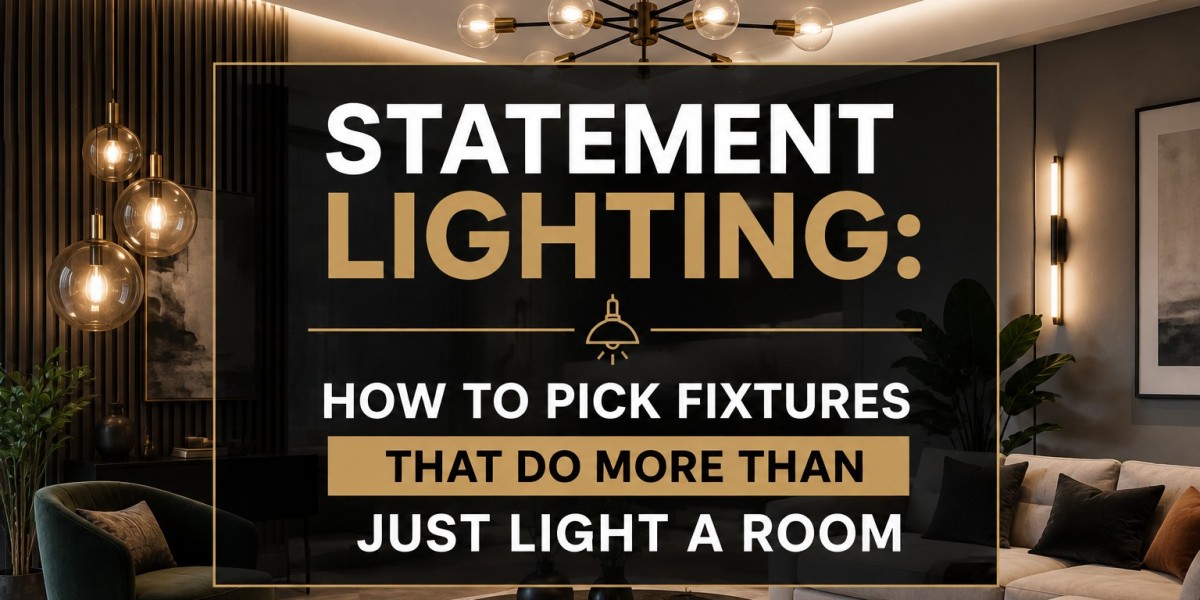

Most lighting in a home is invisible by design. Recessed cans disappear into the ceiling, under-cabinet strips hide beneath cabinetry, and nobody's supposed to notice any of it; they just notice that the room feels well-lit. Decorative lighting flips that idea on its head. These are fixtures meant to be seen, admired, and sometimes built a whole room around. Done well, a single statement piece can do more for a space's character than a fresh coat of paint or a new sofa.
If you've got a room that feels a little flat technically lit but visually forgettable decorative lighting is often the fastest fix. Here's how to think about it.
What Separates "Decorative" From Everyday Lighting
Almost any fixture provides light. Decorative lighting provides light and a design statement, and the second part is really the point. A chandelier over a dining table, a sculptural pendant in an entryway, or a hand-finished sconce flanking a mirror these pieces are chosen as much for their form as their function, sometimes more.
That doesn't mean function gets ignored. A good statement fixture still needs to throw usable light in the right direction and at the right brightness. But the design brief starts with "what does this look like in the room" rather than "how many lumens do we need here."
Why It's Worth the Extra Thought
A plain flush mount will light a hallway just fine. But swap it for a fixture with an interesting silhouette, a warm material, or an unusual shape, and suddenly that hallway has a moment something a guest notices on the way to the living room. Decorative lighting is one of the few design categories that changes both how a room functions and how it feels, at the same time.
Where Statement Fixtures Make the Biggest Impact
Entryways and Foyers
First impressions matter, and the entryway is where they're formed. A distinctive pendant or small chandelier here sets the tone for the rest of the house before a guest has even taken off their coat. Because entryways are often compact, this is also a low-risk place to try a bolder shape or finish than you might commit to elsewhere.
Dining Rooms
The dining table is the classic home for a chandelier, and for good reason it's a fixed focal point, viewed from the same seats night after night. This is the room where it pays to size up: a fixture that's slightly bolder than feels "safe" almost always reads better once it's hung than it did on paper.
Living Rooms
Living rooms tend to be layered spaces, with floor lamps, table lamps, and overhead light all working together. A statement fixture here whether a sculptural pendant or an oversized flush mount acts as the anchor that ties the layers together and gives the eye somewhere to land.
Bedrooms
A decorative fixture doesn't have to be loud to make an impact. In a bedroom, something with softer lines or a warmer material can add personality without competing with the room's job of being restful.
Materials That Define the Look
Handcrafted brass: Warms a room instantly and pairs well with almost any color palette. Look for solid brass rather than plated finishes if you want it to age gracefully over time.
Blown or etched glass: Diffuses light softly and works across both traditional and contemporary interiors, depending on the shape chosen.
Alabaster: Delivers a distinctive, glowing quality that's hard to replicate with any other material a genuine statement in its own right, even unlit.
Mixed metal and glass: Combines the warmth of metal accents with the light-diffusing quality of glass, often giving a more layered, textured look than a single material alone.
A Few Practical Notes Before You Buy
Scale matters more with statement fixtures than with almost any other lighting choice; a piece that's too small will look like an afterthought, and one that's too large can overwhelm a room. As a general guide, measure the space the fixture will occupy and err toward the upper end of what feels comfortable; underscaled statement lighting is a far more common mistake than oversized.
It's also worth checking hanging height and any adjustable drop options before ordering, particularly for rooms with non-standard ceiling heights, so the fixture sits at the right level once installed.
Finding the Right Statement Piece
Once you've settled on a room and a rough sense of material and scale, the process of finding the actual fixture gets much easier. Circ Lighting's decorative lighting collection brings together handcrafted brass, glass, and alabaster pendants, chandeliers, and sconces in a range of sizes, making it a practical starting point for comparing options across styles rather than settling on the first piece you come across.
The right statement fixture isn't just another item on a shopping list, it's the kind of detail that makes a room feel intentional. Give it the same consideration you'd give a piece of furniture, and it'll pay you back every time you walk into the room.