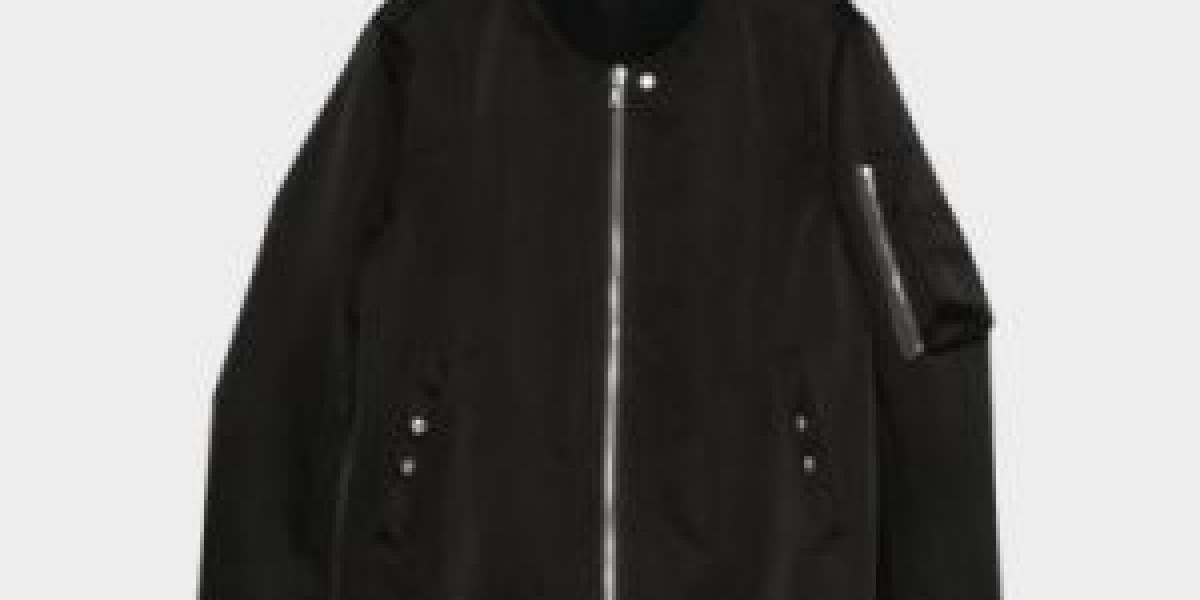

Rick Owens never actually trained as an architect. That surprises people once they hear it, given how often his design language gets described in architectural terms — structural, Brutalist, sculptural. What he has is something closer to an obsession with buildings rather than formal training, and somehow that obsession shows up more clearly in his jackets than in a lot of designers who did study the discipline.Point up front: Rick Owens jackets reflect an architectural sensibility through their emphasis on structure over decoration, raw material honesty, and proportions that treat the body almost like a load-bearing form rather than something to be flattered — a direct extension of his openly stated admiration for Brutalist buildings rather than formal architectural training. That distinction actually matters for understanding why the influence feels genuine rather than borrowed.
Where the Architecture Connection Actually Comes From
Owens has talked in interviews about growing up drawn to Brutalist structures — the heavy concrete buildings from the rick owens century that prioritize raw material and function over ornamentation. That aesthetic obsession predates his fashion career, and it's stayed present in his design work in a way that feels more like genuine fascination than a marketing angle applied after the fact.He didn't study building design formally. What carried over instead was a way of looking at form and material that happened to translate unusually well into clothing.
Brutalism's Core Idea, Translated Into Fabric
Brutalist architecture is built around a simple principle — let the material be honest about what it is, and let structure show rather than hiding it behind decoration. Concrete stays visibly concrete. Support beams stay visible instead of concealed. Nothing gets dressed up to look softer or more palatable than the raw structure actually is.Owens applies that same logic to leather and fabric. Raw hems stay raw instead of finished smooth. Seams sit exactly where the draping process put them instead of being hidden or minimized. The jacket doesn't pretend to be anything other than what its construction actually produced.
Structure Over Body-Flattering Cuts
Traditional tailoring exists to flatter a specific body shape — nip the waist, broaden the shoulder, create an idealized silhouette regardless of what's actually underneath. Owens' jackets do something closer to what architecture does with a structure. They create a form first, and the body exists inside that form rather than the form being built entirely around the body's natural lines.That's a genuinely architectural way of thinking about clothing. Buildings aren't designed around flattering the people who'll walk through them. They establish a structure, and life happens within it.
A Comparison: Traditional Tailoring vs. Architectural Design Thinking
Approach | Traditional Tailoring | Owens' Architectural Approach |
Primary goal | Flatter the body's natural shape | Establish structure, body exists within it |
Material treatment | Polished, finished surfaces | Raw, material honesty prioritized |
Decoration | Often added for visual interest | Removed in favor of structural focus |
Proportion logic | Based on ideal body proportions | Based on form and weight distribution |
Does This Architectural Influence Show Up in Every Jacket Style
To varying degrees, yes — the heavier leather mainline pieces show the influence most obviously through their weight and structural presence, while lighter DRKSHDW styles carry a subtler version of the same logic in their proportions and raw finishing. It's not that only the dramatic pieces count as "architectural." The design thinking runs through the whole catalog, just with different intensity depending on the fabric and intended use.
The Runway Presentation Reinforces This Too
It's worth noting Owens' show spaces often lean into raw, industrial, even Brutalist-adjacent settings — concrete floors, minimal staging, harsh lighting that emphasizes form over prettiness. That's not incidental. The environment the clothes get presented in tends to match the architectural logic behind the clothes themselves, reinforcing the same idea from a different angle. Structure and material honesty, consistently, whether it's fabric or the actual physical space around the runway.
Why This Reads as More Genuine Than Most "Architectural" Fashion Claims
A lot of designers reach for architectural language in marketing copy without much actual design logic backing it up — it sounds sophisticated, so it gets used loosely. Owens' case holds up under scrutiny because the connection shows up structurally, not just descriptively. The raw hems aren't decorative references to Brutalism. They're the direct result of applying Brutalist material honesty to garment construction. That's a meaningful difference between borrowing a word and actually building from a principle.
My Honest Take
I think this is one of the more genuinely interesting things about the brand, and it gets flattened into a marketing buzzword too often. Owens didn't decorate his jackets with architectural references — he applied an actual design philosophy from one discipline into a completely different one, and it held up. That's harder to fake than people realize. Plenty of brands claim architectural inspiration and mean almost nothing specific by it. Owens means something you can actually point to in the stitching.
Bottom Line
Rick Owens jackets reflect his architecture background clearly because the connection isn't decorative — it's structural, running through raw material honesty, form-first proportions, and a Brutalist rejection of unnecessary decoration. That's a rare case of an architectural influence actually showing up in construction logic rather than just getting name-dropped in a brand's marketing copy.