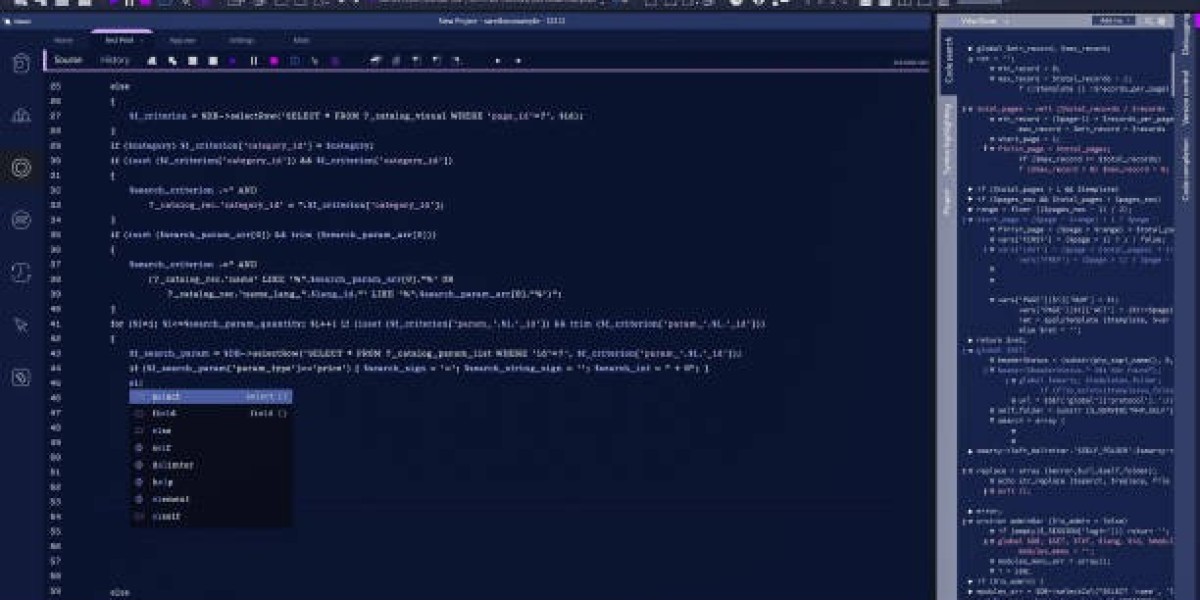

The next generation of business AI will depend heavily on agents that can take action rather than simply generate information. These systems may navigate websites, interact with enterprise applications, modify code, call APIs, and complete workflows with limited human intervention. To develop such capabilities responsibly, organizations need environments where agents can repeatedly practice and be evaluated. RL environment providers specialize in creating these controlled settings. Their work combines software engineering, task design, domain knowledge, realistic data, evaluation logic, and failure analysis. A custom environment can be designed around a particular business process or technical capability, allowing AI teams to study performance under conditions that are closer to actual use than a conventional static benchmark.
Start With a Specific Capability
Environment development becomes more effective when the objective is clearly defined.
Instead of starting with a generic request to create an AI training environment, teams should identify what they want the agent to accomplish. The capability might involve operating software, completing coding tasks, navigating websites, or using multiple APIs.
Once the capability is understood, engineers can translate it into measurable tasks.
This approach avoids creating environments that are technically impressive but disconnected from the real problem the organization is trying to solve.
Realistic Starting Conditions Matter
An agent's behavior can change significantly depending on the information and system state available at the beginning of a task.
A realistic environment therefore needs carefully designed starting conditions. These may include account states, application records, files, repositories, browser sessions, configuration settings, or other relevant information.
The objective is not to reproduce every detail of a production system. Instead, the environment should reproduce the conditions that matter to the capability being tested.
This requires careful decisions about what information should be visible to the agent and what should remain hidden.
Reward and Verification Should Reflect the Objective
A common challenge in agent evaluation is determining whether the agent actually accomplished the task.
A natural-language response saying that something has been completed is not always sufficient. The environment should ideally verify the resulting state.
For coding tasks, this might involve tests or inspection of repository changes. For software workflows, it could involve checking whether the correct record was updated or whether a required process was completed.
Reward design can provide additional structure, particularly in reinforcement learning settings where the agent receives feedback based on its actions.
The objective should be to encourage behavior that corresponds to the intended outcome rather than superficial shortcuts.
Expert Validation Improves Environment Quality
Automation alone cannot always determine whether a task is realistic.
Experts who understand the workflow can review tasks and identify problems such as unrealistic assumptions, ambiguous instructions, missing edge cases, or verification rules that do not properly represent success.
This human review is particularly valuable when environments are designed for specialized business applications.
The role of RL environment providers can therefore include both engineering and expert validation. The combination helps ensure that an environment is technically functional while also being relevant to the capability it is intended to measure.
Turning Failures Into Useful Information
A failed task is not necessarily a failed project.
In agent development, failures can reveal important information. They may show that an agent struggles with planning, tool selection, navigation, context management, or error recovery.
Environment instrumentation can help teams study these behaviors.
Instead of recording only whether a task passed or failed, teams can analyze actions, intermediate states, tool calls, and final outcomes. This creates a richer picture of agent behavior.
Over time, these insights can influence both agent development and environment design.
Conclusion
Custom environments provide AI teams with a structured way to develop and evaluate agents against meaningful tasks. RL environment providers bring together environment engineering, integrations, realistic state design, verification, and expert validation to create these systems.
For organizations building agentic AI, the most useful environment is not necessarily the largest one. It is the environment that accurately represents the capability being studied and provides reliable evidence about whether the agent can perform the intended task.