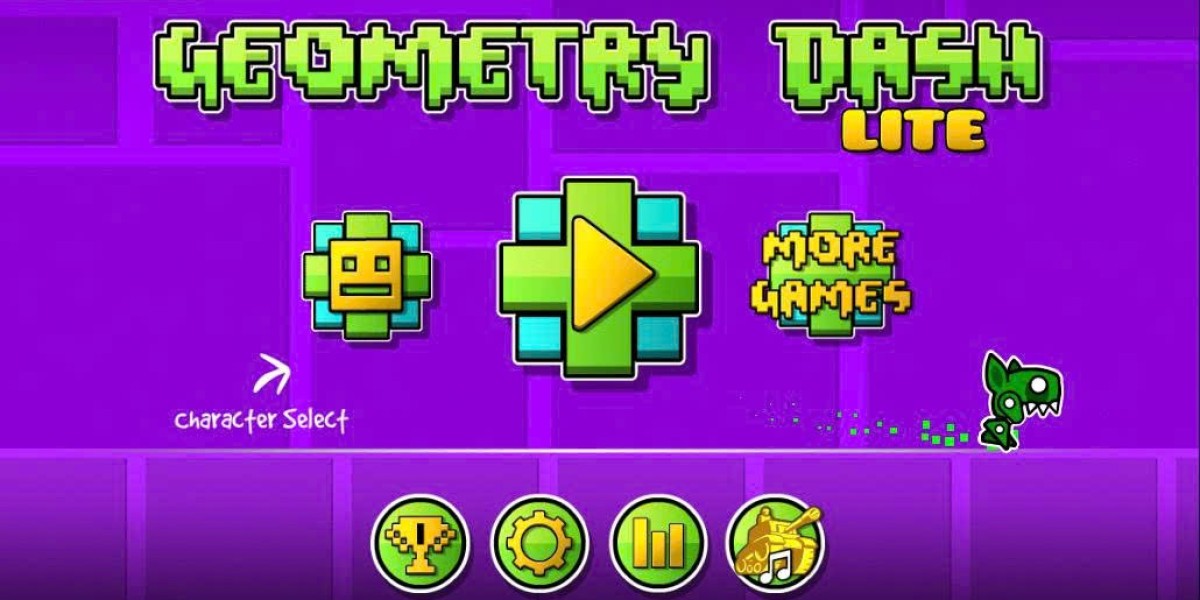

That is the strange pull of the geometry jump — a genre built on rhythm, reflexes, and a level of patience that borders on stubbornness. And no game represents it better than Geometry Dash, a title that has quietly become a rite of passage for anyone who enjoys testing their own precision.
I want to walk you through what makes this style of play so addictive, how it actually works, and a few honest thoughts on getting better without losing your temper along the way.
What You're Actually Doing
Strip away the neon colors and the thumping soundtrack, and the core idea is almost absurdly minimal. Your character is a small square. It moves forward automatically, at a fixed speed, whether you're ready or not. Your only real input is a single action: tap to jump, or hold to keep jumping when you land.
That's it. One button. No combos, no inventories, no skill trees. In a hobby that increasingly rewards complexity, the geometry jump goes the other direction entirely, and that restraint is exactly why it works.
The twist is that this one button has to be pressed at precisely the right moment, over and over, against obstacles that give you almost no margin for error. A fraction of a second early or late and you're restarting from the beginning. What looks like a simple arcade diversion is really a test of timing, memory, and emotional control all at once.
What keeps people coming back is the marriage of movement and music. Levels are built around their soundtracks, and the obstacles tend to land on the beat. Once you stop fighting the rhythm and start feeling it, something clicks. Your hands begin to anticipate rather than react, and a sequence that felt impossible twenty minutes ago starts to flow.
The Loop That Hooks You
The structure is deceptively elegant. You attempt a level, you fail, you learn a little, you try again. Progress doesn't come from grinding for better gear or unlocking upgrades — it comes from your own growing familiarity with the pattern in front of you.
Early levels are forgiving and teach you the basics without much fuss. Then the difficulty curve bends upward sharply. Different modes change how your character behaves: sometimes you're flipping gravity, sometimes you're flying a ship through narrow corridors, sometimes you're riding a wave that demands you hold an impossibly steady line. Each shift forces you to relearn your instincts.
In the main game, each level is broken into three coins hidden in tricky spots, and there's a practice mode that lets you drop in checkpoints so you can dissect a brutal section without replaying the whole thing. This is where the real learning happens. You're no longer just reacting; you're studying.
And then there's the community side, which is honestly where the genre becomes something bigger. Players build their own levels with a built-in editor and share them online. Some are gentle showcases of creativity. Others are designed specifically to break you. Exploring that ocean of user-made content is a game in itself, and it means the challenge never truly runs dry.
Getting Better Without Losing Your Mind
Here are the things I wish someone had told me earlier.
Practice mode is not cheating. It's a study tool. Drop checkpoints liberally, learn each segment in isolation, then string them together. Trying to brute-force a level from the start every single time is how you burn out.
Memorize in chunks, not as a whole. Your brain handles a level better when you break it into sections and master them one at a time. Once each piece feels automatic, the full run stops feeling overwhelming.
Turn the music up. The soundtrack isn't decoration; it's information. Since obstacles tend to sync with the beat, listening carefully gives you a timing cue that your eyes alone won't provide.
Step away when you're frustrated. This one matters more than any technique. Tilt is real, and it makes your hands sloppy. Five minutes away from the screen often does more for your progress than fifty angry attempts.
Change levels when you're stuck. Sometimes you just hit a wall. Playing something else for a while clears your head and, oddly, often makes the hard part feel easier when you return.
Accept that dying is the process. Nobody clears a challenging level on the first attempt. The failures aren't interruptions to the fun — they are the game. Reframing it that way takes a lot of the sting out.
Why It's Worth Your Time
The geometry jump genre has a reputation for being punishing, and honestly, that reputation is earned. But underneath the frustration is something genuinely satisfying. The sense of control you develop, the way a level that once seemed impossible gradually becomes second nature, the electric moment when your hands finally keep up with your intent — these are the rewards that keep players hooked for years.
It's a hobby that asks for almost nothing in terms of setup and gives back a surprisingly deep well of challenge, creativity, and community. You don't need to be naturally gifted. You just need to be willing to fail a lot and keep tapping.
So if you've been curious about the fuss, give it a shot. Start with something easy, expect to die often, and let the rhythm do the rest. You might surprise yourself with how far a single button can take you.