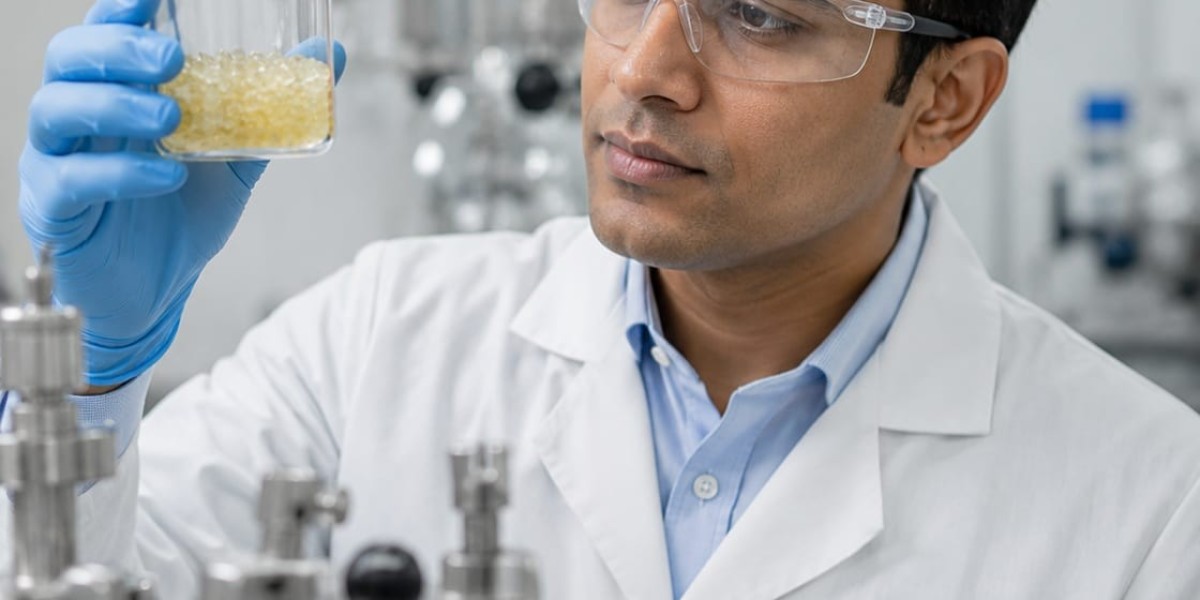

Water softener resin is the material inside a traditional water softener that removes hardness-causing minerals from water. Made as small polymer beads, the resin uses ion exchange to reduce calcium and magnesium, helping prevent scale and improve the performance of water-using equipment.
For residential, commercial, and industrial systems, selecting the appropriate resin is important for achieving reliable water-softening performance.
What Is Water Softener Resin?
Water softener resin is a synthetic ion exchange material manufactured in the form of tiny spherical beads. The most common type used for conventional water softening is strong acid cation (SAC) resin.
Each bead contains negatively charged functional groups that attract positively charged ions. When the resin is in its sodium form, it holds sodium ions. As hard water passes through the resin bed, calcium and magnesium ions replace the sodium ions.
This exchange process reduces the hardness of the treated water.
How Does Water Softener Resin Work?
A softener tank contains a bed of resin beads. During the service cycle, hard water flows through the bed.
The resin attracts calcium and magnesium while releasing sodium into the water. The treated water then exits the tank with reduced hardness.
Eventually, the available exchange sites become occupied by hardness minerals. At this point, the resin becomes exhausted and needs regeneration.
The effectiveness of the process depends on factors such as resin capacity, water chemistry, flow rate, contact time, and regeneration conditions.
What Is Resin Regeneration?
Regeneration restores the resin's ability to exchange ions. In a conventional salt-based softener, a concentrated sodium chloride solution, commonly called brine, is passed through the resin bed.
The sodium-rich solution replaces calcium and magnesium on the resin. The displaced hardness minerals are then flushed from the system.
A typical regeneration cycle includes:
- Backwash – Cleans and expands the resin bed.
- Brining – Introduces the salt solution.
- Slow rinse – Moves brine through the resin.
- Fast rinse – Removes remaining salt and hardness.
- Service – Returns the softener to normal operation.
Correct regeneration helps maintain the resin's working capacity.
Benefits of Water Softener Resin
A properly selected resin can help provide:
- Reduced calcium and magnesium hardness
- Better control of scale formation
- Protection for plumbing and water-using equipment
- Improved soap and detergent performance
- More efficient water-heating operation
- Consistent softening when properly maintained
Softening can also be used as a pretreatment step in larger water treatment systems.
What Factors Affect Resin Performance?
Several conditions can influence how effectively softener resin operates.
Feed-Water Quality
High levels of hardness, iron, manganese, chlorine, organic contaminants, or other substances can affect resin performance and service life.
Flow Rate
The water should flow through the resin bed at an appropriate rate. Excessive flow can reduce treatment efficiency and affect pressure drop.
Regeneration
Insufficient salt, incorrect settings, or incomplete regeneration can leave the resin partially exhausted.
Temperature
Resin should be operated within its recommended temperature range to maintain physical and chemical stability.
Maintenance
Regular inspection and correct regeneration help maintain the condition of the resin bed and the overall softener.
How to Choose Water Softener Resin
Choosing resin based only on price can result in poor system performance. Consider the following factors before selecting a product.
Resin type: Strong acid cation resin is widely used for conventional water softening.
Exchange capacity: Capacity determines how much hardness the resin can remove under specified operating conditions.
Bead size: Different bead sizes can influence pressure drop and flow characteristics.
Water chemistry: Feed-water analysis helps identify potential contaminants that could affect the resin.
System requirements: Flow rate, bed depth, regeneration method, temperature, and required treated-water quality should all be considered.
Water Softener Resin for Industrial Applications
Industrial softening systems often operate at much higher flow rates and have more demanding water-quality requirements than residential systems.
Softener resin can be used for applications such as:
- Boiler feedwater pretreatment
- Reverse osmosis pretreatment
- Industrial process water
- Cooling water treatment
- Commercial water conditioning
For these applications, resin selection should be based on detailed feed-water analysis and system operating conditions.
How Long Does Water Softener Resin Last?
The service life of resin varies according to operating conditions. Water chemistry, oxidant exposure, regeneration practices, temperature, flow rate, and mechanical stress can all affect longevity.
If a softener begins producing hard water, resin replacement is not necessarily the immediate solution. Check the brine system, control valve, regeneration settings, salt supply, and water quality first.
If the system is functioning correctly and the resin has permanently lost capacity, replacement may be required.
Signs of Resin Problems
Potential signs of declining resin performance include:
- Hardness remains high after regeneration
- Softening capacity decreases
- Regeneration becomes more frequent
- Resin beads become damaged
- Proper regeneration does not restore performance
Water testing can help determine whether the resin itself needs attention.
Conclusion
Water softener resin is the key material used in ion exchange systems to reduce calcium and magnesium from hard water. Strong acid cation resin is commonly selected for conventional softening because it can be regenerated and reused.
For dependable performance, resin should be selected according to feed-water chemistry, exchange capacity, flow rate, operating conditions, and regeneration requirements. Proper system sizing and maintenance can help extend resin life and maintain consistent water softening.