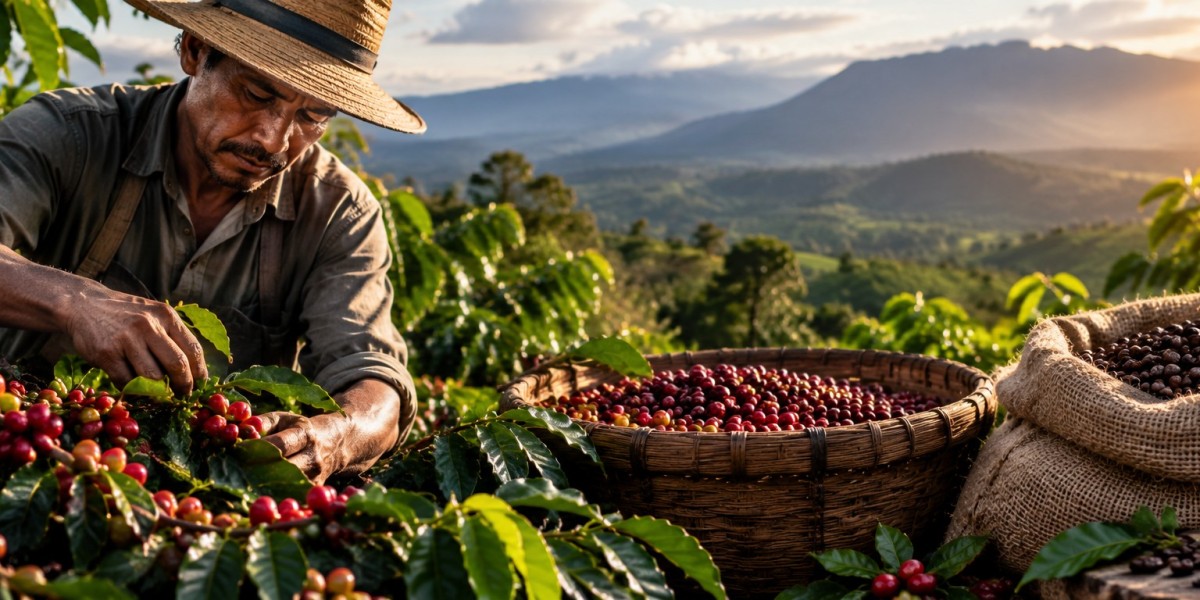

High mountain coffee farming on the Big Island of Hawaii represents a remarkable pinnacle of world coffee culture. Nestled along the fertile volcanic slopes of Mauna Loa and Hualalai, the Kona coffee belt features an extraordinary ecosystem where ideal elevation, mineral rich volcanic soil, sun drenching mornings, and misty afternoon rains come together to create incomparable growing conditions.
Understanding the journey from seed to roast requires an appreciation for the traditional agricultural practices passed down through generations of local Hawaiian farmers. High altitude shade grown farming allows coffee cherries to mature slowly under native forest canopies.
Volcanic Soil and Microclimates of the Kona Coffee Belt
The unique volcanic geology of the Big Island plays a foundational role in shaping the distinct flavor profiles of high elevation Hawaiian coffees. The soil in this active geological zone is dense with essential minerals like potassium, magnesium, and calcium, providing coffee trees with continuous natural nutrition.
Elevation works in harmony with atmospheric conditions along the slopes of Hualalai and Mauna Loa. Coffee cultivated at high mountain elevations between one thousand and three thousand feet experiences cooler night temperatures that slow down fruit maturation.
Why the Words on a Coffee Bag Matter
Coffee packaging often includes descriptions about origin, flavour, roast, and quality. Some terms tell you where the beans were grown, while others describe how the coffee was processed or what the finished drink may taste like. Knowing the difference helps you make a more informed purchase.
This is especially important when shopping for coffee associated with a specific growing region. A product that contains only beans from one region is different from a blend that combines beans from multiple locations. Both can be enjoyable, but they are not interchangeable if your goal is to buy coffee from a particular place.
Clear labels help buyers understand what they are purchasing, compare products fairly, and avoid relying on vague marketing language.
What Does a 100% Origin Claim Tell You?
An origin claim identifies where the coffee was grown. When a product is described as 100% Kona coffee, the claim indicates that the coffee comes entirely from the Kona growing region rather than containing a mixture of Kona beans and beans from other origins.
A Kona blend may contain some Kona coffee alongside coffee from other growing regions. The word blend is not automatically a sign of poor quality, but it describes a different product composition. Customers should understand that distinction before comparing prices or flavour expectations.
The full label matters. Read the origin statement carefully, check the producer information, and review the product description for details about the farm, roast, and available format.
Why Regional Coffee Can Have a Higher Price
Coffee grown in a recognised region may carry additional production costs. Land availability, agricultural labour, selective harvesting, processing, quality control, and small scale production can all affect the final price.
Kona is a relatively limited growing area compared with the global coffee market. That limited supply contributes to its distinctive place in specialty coffee, but the price of any particular product also reflects the producer's practices, packaging, distribution, and retail arrangements.
Price should be considered alongside the actual product details. A high price alone does not verify origin or guarantee that the flavour will suit your preferences.
How to Check Product Information
Start with the front label, but do not stop there. Look for the full origin statement, the name of the producer or seller, and details about whether the coffee is whole bean or ground. Roast information and freshness guidance are also useful.
If a seller provides information about the estate or growing area, use it to understand the product's provenance. Clear contact information and consistent descriptions can help you assess how transparently the product is presented.
For premium regional coffee, official labelling guidance is also worth consulting. Hawaii has specific requirements relating to coffee origin claims, and checking current official information can help clarify the terminology used in the marketplace.
Understanding the Difference Between Origin and Roast
Origin tells you where the coffee was grown, while roast describes how the beans were heated after processing. These are separate characteristics that influence different parts of the coffee experience.
A medium roast may balance sweetness, body, and aromatic detail. A darker roast usually develops more pronounced toasted flavours, while a lighter roast can retain more delicate characteristics. The exact result depends on the green coffee and the roasting approach.
This distinction matters when comparing two bags labelled with the same origin. They may taste noticeably different because their roast profiles, varieties, processing methods, or freshness differ.
Choosing Authentic 100 Percent Kona Coffee
For shoppers searching for 100 percent Kona coffee, the key is to check the origin claim and the information supporting it. Buddha's Cup provides details about its Hawaiian grown estate coffees, including product descriptions and information about its growing approach.
Review the specific coffee you are considering, rather than assuming every product from a seller has the same roast or flavour. Compare available formats, read the product details, and choose the option that fits your brewing method and budget.
Choosing Between Whole Bean and Ground Coffee
Whole beans offer more control over freshness because you can grind the amount needed immediately before brewing. Ground coffee is convenient, particularly if you do not own a grinder, and can still produce a good cup when stored properly.
The grind should match your brewing method. Coarse grounds are commonly used for French press and cold brew, while many filter methods work with a medium grind. Espresso generally requires a finer grind that can be adjusted to suit the machine and coffee.
If you are buying a gift, consider the recipient's equipment. Whole beans are useful for someone with a grinder, while ground coffee may be more practical for someone who prefers a straightforward preparation routine.
Getting the Best Flavour From Your Purchase
Good coffee can taste disappointing if it is brewed inconsistently. Water quality, grind size, coffee dose, water temperature, and contact time all affect extraction. If the recipe changes every morning, it becomes difficult to know whether a flavour difference comes from the beans or the preparation.
Start with a measured ratio and use clean equipment. Taste the result before adding sweeteners or milk, particularly if you want to understand the coffee's natural character.
When the cup tastes too bitter, try a coarser grind or a shorter extraction. If it tastes weak, adjust the dose or grind gradually. Making one change at a time helps you learn which adjustments improve the result.
Storage and Freshness After Opening
Coffee gradually loses aroma after roasting, especially when exposed to oxygen, heat, light, and moisture. Store it in an airtight container in a cool, dry location and avoid leaving the bag open on a kitchen counter.
Buy an amount that suits your consumption. A large bag may offer better value per unit, but only if you can use it while the coffee remains enjoyable. For occasional drinkers, a smaller package may be a more practical choice.
Avoid storing coffee near strong smelling ingredients, since the storage environment can affect the aroma. Keep your grinder and brewing equipment clean so that old coffee oils do not interfere with the taste of a fresh batch.
Matching Coffee to Your Personal Preferences
A product's origin can be an important part of its identity, but flavour preference is personal. Some people enjoy floral and bright coffees, while others prefer chocolate like sweetness or deeper roasted notes.
Think about how you drink coffee most often. If you enjoy black filter coffee, a profile with clear aromatic detail may appeal to you. If you make lattes, you may prefer a coffee that retains its flavour when combined with milk.
Descriptions can guide your selection, but tasting remains the best way to decide whether a coffee is right for you. Start with one product, prepare it consistently, and compare it with another only after you understand the first.
Conclusion
Understanding coffee labels makes specialty coffee easier to navigate. Origin claims, blend descriptions, roast levels, and freshness information each tell you something different about the product. Reading these details carefully can help you choose coffee based on what matters to you instead of relying on broad claims or price alone.
If regional authenticity is important, look for clear origin information and consult relevant official guidance. Then focus on roast, storage, and brewing to get the most from your purchase. An informed approach makes it easier to appreciate authentic Hawaiian coffee and choose a product that fits your daily routine.