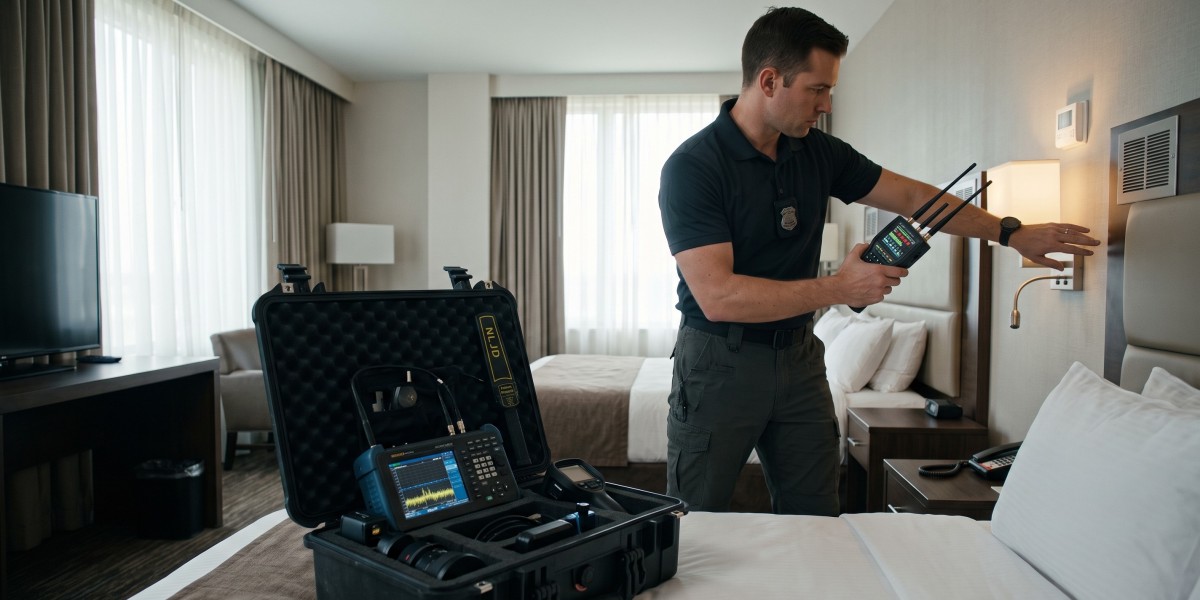

Staying in a hotel should provide comfort, security, and peace of mind. However, travellers may sometimes worry about unauthorized recording devices or listening equipment in unfamiliar accommodation. Hotel room bug sweepers are designed to help identify potential surveillance devices, giving travellers another way to check their surroundings and take reasonable steps to protect their privacy.
These tools can use different technologies to detect radio frequency signals, locate certain camera lenses, or identify other signs of electronic surveillance. Their capabilities vary, and no single device can guarantee that every hidden camera or listening device will be found. Some surveillance equipment operates without transmitting signals, while other devices may remain inactive during an inspection.
Understanding how these tools work, where potential concerns may arise, and how to conduct a responsible room inspection can help travellers make better-informed decisions. Whether you are travelling for business, staying in a holiday rental, or booking a hotel for a family trip, a sensible privacy check can be a useful part of your travel routine.
Why Should Travellers Consider Checking Their Hotel Rooms?
Most hotels operate legitimate security systems to protect guests, staff, and property. However, recording someone in a private space without proper authorization can raise serious privacy and legal concerns.
A hotel room is a temporary personal space where guests may change clothes, discuss confidential matters, or store sensitive belongings. For this reason, reasonable privacy precautions can be worthwhile, particularly when unfamiliar equipment is encountered.
Here are several reasons travellers may consider a privacy inspection:
Personal privacy: Guests may want reassurance that their private activities are not being recorded without their knowledge.
Business confidentiality: Professionals travelling with sensitive documents or devices may take additional precautions.
Family safety: Parents may want to check unfamiliar accommodation before allowing children to settle in.
Holiday rentals: Properties with different layouts and equipment may require closer attention to unfamiliar objects.
Peace of mind: A structured inspection can help travellers address concerns without relying on assumptions.
It is important to distinguish between legitimate security equipment and unauthorized surveillance. An unfamiliar electronic device does not automatically indicate that recording is taking place.
What Are Hotel Room Bug Sweepers and How Do They Work?
Hotel room bug sweepers are inspection devices intended to help identify potential electronic surveillance equipment. The term is commonly used for portable tools that detect certain signals or provide assistance when checking unfamiliar spaces.
Different products use different technologies, so their capabilities should be evaluated individually.
Radio Frequency Detection
Radio frequency (RF) detectors scan for signals emitted by some wireless electronic devices.
Certain surveillance devices transmit information through Wi-Fi, Bluetooth, cellular networks, or other radio frequencies. When a compatible signal is detected, the equipment may produce an audible alert or visual indicator.
However, RF detection has important limitations. Ordinary electronics, including routers, smartphones, and wireless accessories, can trigger alerts. Devices that record locally, use wired connections, or remain inactive during scanning may not be detected.
An RF alert should therefore be investigated rather than treated as proof of surveillance.
Camera Lens Reflection Detection
Some inspection tools use visible light or specialised illumination to help identify reflections from camera lenses.
When light reaches a suitable lens surface, a reflection may become visible from a particular viewing angle. This technique can assist with inspecting objects that appear unusual or are positioned toward private areas.
Nevertheless, reflective screws, glass, polished surfaces, and other materials can produce similar reflections. A lens may also be difficult to identify because of its size, placement, or surrounding material.
This method should be regarded as an additional inspection aid, not a guarantee that all cameras will be located.
Infrared Detection
Certain cameras use infrared illumination to capture images in low-light conditions. Compatible inspection equipment may help identify some infrared sources that are not readily visible to the naked eye.
However, not all surveillance cameras use infrared illumination. Some sources may also be difficult to distinguish from other electronic components.
Infrared inspection can be useful in appropriate circumstances, but its limitations should be understood before conclusions are drawn.
Network-Based Inspection
Some connected devices communicate through a local network. Network inspection tools may help identify unfamiliar devices on a network that the user is authorised to examine.
However, an unfamiliar network device is not necessarily a surveillance camera. It could be a television, printer, smart speaker, or another legitimate piece of equipment.
Similarly, cameras using cellular connections, separate networks, or local storage may not appear in a particular network scan.
Which Areas Should Be Checked During a Hotel Room Inspection?
A methodical inspection is generally more useful than searching randomly. Start with areas where privacy is particularly important, and focus on objects that appear unusual or lack an obvious purpose.
1. Bedroom and Sleeping Area
The bedroom is a sensible place to begin because guests may change clothes, sleep, and keep personal belongings there.
During a visual inspection, pay attention to:
Unfamiliar electronic objects facing the bed.
Decorative items that appear out of place.
Unexplained openings in objects or equipment.
Recently installed devices whose purpose is unclear.
Equipment positioned in unusual locations without an apparent reason.
These observations are not proof that a camera is present. If an object appears suspicious, further investigation should be handled carefully and without damaging the property.
2. Bathroom and Changing Area
Bathrooms and changing areas require particular attention because unauthorized recording in these spaces can represent a serious invasion of privacy.
Look for unfamiliar objects or electronic equipment that does not appear to serve a reasonable purpose. Avoid dismantling fixtures, opening electrical panels, or removing installed equipment.
If credible concerns arise, leave the area if necessary and report the matter to hotel management or the relevant local authority.
3. Living Area and Work Desk
Hotel rooms may contain televisions, smart speakers, telephones, charging equipment, and other connected devices.
A visual inspection can help you understand what equipment is present and whether its purpose is clear. If a device appears unusual, hotel staff may be able to explain why it has been installed.
Business travellers should also consider their own information security, including the safe handling of confidential documents and electronic devices.
4. Unfamiliar Electronic Equipment
Do not assume that every sensor, indicator light, or small opening is suspicious. Smoke detectors, occupancy sensors, thermostats, and other equipment may have legitimate safety or operational functions.
If the purpose of a device cannot be established, seek clarification before taking further action.
How to Use Hotel Room Bug Sweepers Responsibly
A careful inspection process can make detection equipment easier to use and help reduce false alarms.
Step 1: Review the Manufacturer's Instructions
Before using hotel room bug sweepers, check the device's supported detection methods, operating range, sensitivity settings, and limitations.
The equipment should be charged and tested according to the manufacturer's guidance. Different products may require different scanning techniques.
Step 2: Conduct a Visual Inspection
Begin by observing the room and identifying unfamiliar objects. Consider whether their placement and apparent function are consistent with normal hotel equipment.
This initial inspection provides context for interpreting any alerts produced by electronic detection tools.
Step 3: Follow a Consistent Inspection Process
Inspect the room in manageable sections, such as the sleeping area, bathroom, and living space.
Follow the manufacturer's recommended procedure rather than moving the detector randomly. Environmental conditions and nearby electronics may affect the results.
Step 4: Investigate Alerts Carefully
An alert may indicate the presence of a compatible electronic signal, but it does not establish that the source is a listening device or camera.
Where appropriate, repeat the scan and compare the result with the surrounding equipment. If the source cannot be identified, professional assistance may be appropriate.
Step 5: Record Credible Concerns
If a device appears to be an unauthorized recording device in a private area, avoid touching, removing, or dismantling it.
Where safe and lawful, document its location and appearance from a reasonable distance. Report the concern to hotel management, the booking platform, or the appropriate local authority.
If you believe your privacy may be at immediate risk, consider leaving the room while the concern is investigated.
What Features Should You Look for When Choosing a Detection Device?
Not every detector is suitable for every traveller. The most appropriate option depends on the intended use, the type of equipment being checked, and the level of technical knowledge required.
Multiple Detection Capabilities
Some products combine RF detection with lens reflection inspection or other features. These combinations can support a broader inspection, although they do not guarantee that every surveillance device will be identified.
Check the manufacturer's specifications to confirm which detection technologies are actually included.
Portability and Battery Life
Travellers may prefer compact devices that fit easily into a travel bag. Battery life is also important when inspections are conducted away from a power source.
The advertised battery duration should be assessed alongside the device's operating conditions and charging requirements.
Ease of Operation
A detector with clear controls, understandable alerts, and straightforward instructions may be more practical for occasional users.
Complicated settings can make results harder to interpret, particularly when the user is unfamiliar with electronic detection equipment.
Technical Specifications and Limitations
Reliable product descriptions should explain supported frequencies, detection methods, and operating limitations.
Be cautious of marketing claims that promise complete detection of every hidden camera or listening device. No consumer device should be assumed to provide absolute protection under all conditions.
Common Mistakes to Avoid During a Hotel Privacy Check
A privacy inspection can become less useful when incorrect assumptions are made or equipment is used improperly.
Avoid these common mistakes:
Relying on one tool: Different surveillance devices operate in different ways, and one detection method may not identify them all.
Treating every alert as evidence: Normal electronic equipment may generate signals that trigger an RF detector.
Ignoring device instructions: Incorrect settings or scanning techniques may reduce effectiveness.
Dismantling unfamiliar equipment: This may cause damage, create safety risks, or interfere with legitimate hotel equipment.
Making unsupported accusations: Unusual objects should be investigated before conclusions are reached.
Expecting complete certainty: A successful scan cannot guarantee that a room is entirely free of surveillance devices.
A measured approach helps ensure that concerns are assessed responsibly rather than based on fear or speculation.
Additional Ways to Protect Your Privacy While Travelling
Detection equipment is only one part of a broader personal privacy strategy. Other precautions can help reduce unnecessary risks during hotel stays.
Consider the following steps:
Review the accommodation's surveillance policy before booking.
Choose reputable hotels and accommodation providers.
Ask management to explain unfamiliar equipment when necessary.
Keep confidential documents and sensitive conversations appropriately protected.
Avoid connecting personal devices to unfamiliar networks unless necessary.
Report credible privacy concerns through official channels.
Seek qualified technical assistance when the presence or purpose of a device cannot be established.
Privacy and surveillance laws vary by jurisdiction. The legality of recording, the disclosure of surveillance equipment, and the circumstances in which recording is permitted may differ between locations.
If a serious incident is suspected, local legal guidance can help clarify the appropriate next steps.
Final Thought
Personal privacy deserves attention whenever you stay in unfamiliar accommodation. Hotel room bug sweepers can provide an additional way to check for certain electronic surveillance devices, but their effectiveness depends on the technology being used and the conditions in which an inspection is performed. A combination of visual checks, suitable detection equipment, careful interpretation of alerts, and responsible reporting can help travellers make more informed decisions. Rather than relying on a single device for complete reassurance, focus on practical precautions, credible evidence, and appropriate action whenever a genuine privacy concern arises.