
Buying equipment is an important decision for any business. Whether you need machinery, computers, vehicles, or other tools, the right equipment can help you improve your work and support business growth. However, purchasing equipment can require a large amount of money. For this reason, many business owners consider financing to spread the cost over time.
Before choosing a financing option, it is important to understand how much you may need to pay each month. You should also know how the interest rate, repayment period, and other costs can affect the total amount you repay. An equipment finance calculator can help you estimate these expenses and prepare a suitable budget.
However, the results of a calculator depend on the information you enter. Changing even one detail, such as the loan amount or repayment term, can change your estimated payments. Understanding these factors can help you use the calculator more effectively and make better financial decisions.
Smart Business Credit helps business owners explore their financing needs and understand important financial considerations before making business credit decisions.
What Is an Equipment Finance Calculator?
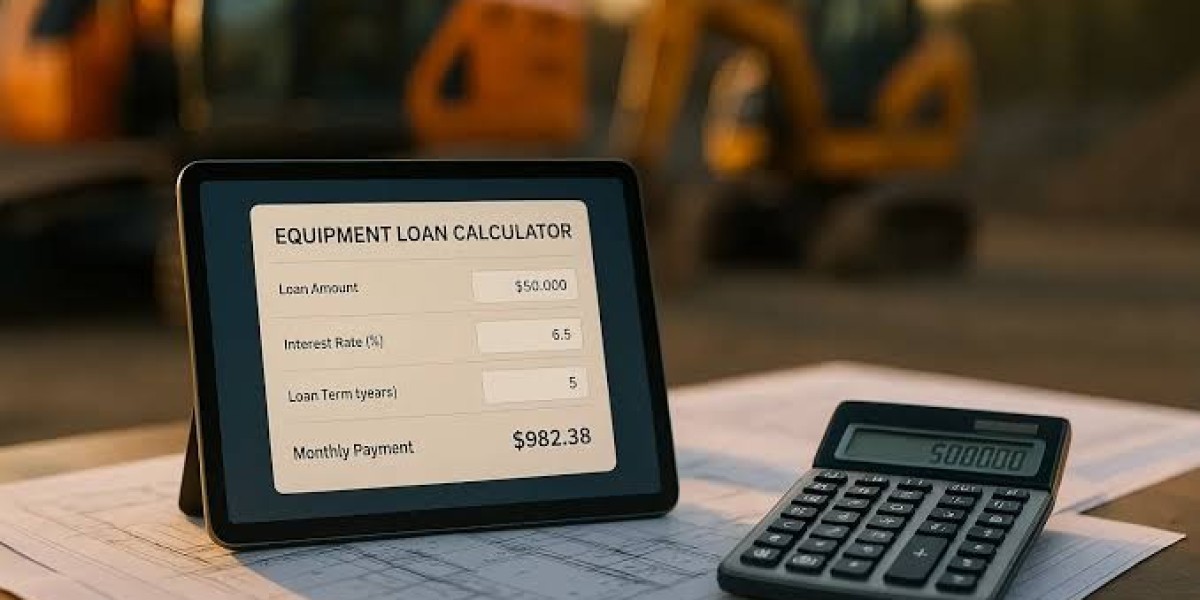
An equipment finance calculator is an online tool that estimates the cost of financing equipment. It usually uses details such as the amount borrowed, interest rate, and repayment period to calculate an estimated monthly payment.
For example, suppose your business needs equipment worth $30,000. You plan to pay $5,000 upfront and finance the remaining $25,000. You can enter the amount you want to borrow, the interest rate, and the repayment period into a calculator to estimate your monthly payments.
This information helps you understand whether the financing may fit your business budget. It can also help you compare different repayment options before applying for financing.
However, calculator results are estimates rather than guaranteed loan offers. Your actual payments may differ because of lender requirements, additional fees, and the specific terms of your financing agreement.
1. The Total Amount You Borrow
The amount you borrow is one of the most important factors affecting the results of an equipment finance calculator. In general, borrowing more money leads to higher monthly payments when the interest rate and repayment period remain the same.
For example, a business that borrows $10,000 will usually have lower payments than a business that borrows $25,000 under otherwise identical loan terms.
Before using a calculator, determine the total cost of the equipment you want to purchase. Then consider whether you can pay part of the cost upfront.
Borrowing only what you need may help reduce your monthly payments and the amount of interest you pay. However, you should also keep enough money available for regular business expenses and unexpected costs.
By entering an accurate loan amount, you can receive a more useful estimate and plan your equipment purchase with greater confidence.
2. The Interest Rate
The interest rate is another major factor that affects your financing costs. Interest is the cost of borrowing money, and it is usually expressed as a percentage of the amount borrowed.
When the loan amount and repayment period remain the same, a higher interest rate generally results in higher monthly payments and a greater total repayment amount.
For example, imagine you are comparing two financing options for the same equipment. One option has a lower interest rate, while the other has a higher rate. An equipment finance calculator can help you estimate the difference between their payments.
This comparison can help you understand why reviewing financing offers is important. However, the lowest advertised rate may not always be available to every business. Your credit history, financial position, and the lender's requirements may affect the rate you receive.
When comparing offers, use the actual interest rates provided to you whenever possible. This will make your calculations more relevant to your situation.
3. The Repayment Period
The repayment period is the length of time you have to repay the borrowed money. It may be measured in months or years, depending on the financing agreement.
A shorter repayment period usually means higher monthly payments because you must repay the loan in less time. However, it can reduce the total interest paid over the life of the loan.
A longer repayment period spreads the payments over more months. This can make each payment smaller, but you may pay more interest overall.
For example, you might compare a three-year repayment period with a five-year repayment period for the same equipment purchase. The calculator can show how the monthly payment and total borrowing cost may change.
When choosing a repayment period, consider your monthly income, operating expenses, and the expected useful life of the equipment. The goal is to find a repayment schedule that supports your cash flow without creating unnecessary financial pressure.
4. The Down Payment
A down payment is the amount you pay upfront when purchasing equipment. The remaining balance may then be financed through a loan or another financing arrangement.
A larger down payment generally reduces the amount you need to borrow. As a result, it may reduce your monthly payments and total interest costs.
For example, suppose a piece of equipment costs $20,000. If you pay $4,000 upfront, you may need to finance only $16,000, before considering any additional charges.
If you pay $6,000 upfront instead, the amount borrowed falls to $14,000. Under the same interest rate and repayment period, the smaller loan will generally have lower monthly payments.
An equipment finance calculator can help you compare these possibilities.
However, paying a larger down payment also means using more of your available cash. Before making that choice, make sure you still have enough money to cover payroll, inventory, rent, and other essential business costs.
5. Additional Fees and Charges
The total cost of equipment financing may include more than the amount borrowed and the interest charged. Depending on the agreement, additional costs may include application fees, origination fees, documentation charges, or other financing-related expenses.
These charges can affect the total amount you pay, even if they do not appear in the calculator's initial results.
Some calculators allow you to enter additional fees, while others calculate payments using only the loan amount, interest rate, and repayment period.
Before relying on the results, check which costs are included. If the calculator does not account for certain charges, consider them separately when estimating your total expenses.
For example, two financing offers may have similar monthly payments but different setup fees. Looking only at the monthly payment could cause you to overlook the difference in their overall costs.
Reviewing all charges helps you make a more complete comparison and understand what the financing will actually cost your business.
6. The Type of Interest Rate
The type of interest rate used in a financing agreement can also affect your calculations. Two common types are fixed interest rates and variable interest rates.
A fixed interest rate remains the same throughout the agreed period. This can make payments easier to plan because the rate does not change with market conditions.
A variable interest rate can change over time, depending on the terms of the agreement and the factors used to determine the rate. If the rate increases, your payments or total borrowing costs may also increase, depending on the financing structure.
An equipment finance calculator may assume that the interest rate stays constant. If you enter a variable rate, the result might not reflect future changes.
For this reason, read the financing terms carefully and understand how the rate works. If the rate can change, consider whether your business could manage higher payments in the future.
7. The Payment Schedule
The payment schedule describes how often you must make payments. Many financing agreements require monthly payments, while some arrangements may use a different schedule.
The frequency and timing of payments can affect how you manage your business cash flow. A calculator designed for monthly payments may not provide an accurate estimate for an agreement with a different payment structure.
It is also important to understand when the first payment is due and whether payments are equal throughout the repayment period.
When using a calculator, select the payment frequency that matches your financing terms if that option is available. If it is not available, treat the result as a general estimate rather than an exact payment amount.
Understanding the payment schedule helps you plan when money will leave your business account and how much you need to keep available.
8. The Financing Structure
Not all equipment financing arrangements work in the same way. Some agreements use a standard loan structure, while others may involve leasing, balloon payments, or different end-of-term conditions.
A standard installment loan generally requires you to repay the borrowed amount and interest through scheduled payments.
A lease may have different payment terms and may not result in ownership of the equipment at the end of the agreement. Some financing arrangements may also require a larger final payment, sometimes called a balloon payment.
An equipment finance calculator designed for a standard loan may not accurately estimate payments for these other structures.
Before entering your information, check whether the calculator matches the type of financing you are considering. If it does not, you may need a specialized calculator or a detailed payment schedule from the financing provider.
This step helps prevent confusion and makes your comparison more reliable.
9. Your Business Credit and Financial Position
Your business credit history and financial position can influence the financing terms available to you. Lenders may review your payment history, business income, existing debts, time in operation, and other financial details when assessing an application.
These factors do not always change the mathematical result produced by a calculator directly. Instead, they may affect the interest rate, loan amount, repayment period, or other terms you can qualify for.
For example, two businesses may want to finance the same equipment for the same price but receive different offers because their financial circumstances are different.
An equipment finance calculator can help you test different interest rates and repayment periods to understand how possible terms affect your budget.
Smart Business Credit can be a starting point for business owners who want to understand business credit and prepare for financing decisions.
Remember that a calculator cannot determine whether your application will be approved. Only the financing provider can assess your application and confirm the terms available to you.
10. The Accuracy of the Information You Enter
The results of any calculator depend on the accuracy of the information you provide. Incorrect figures can produce estimates that do not reflect your actual financing needs.
For example, entering the full equipment price instead of the amount you need to borrow may result in an incorrect estimate if you plan to make a down payment.
Similarly, using an interest rate that differs from your actual offer can make the estimated payment less useful.
Before calculating your payments, confirm the equipment price, down payment, loan amount, interest rate, and repayment period. Check whether the calculator requires an annual interest rate or another format.
It is also helpful to compare the result with the payment schedule provided by a lender when one becomes available.
Accurate information makes the calculator more useful for budgeting and comparing possible financing arrangements.
How Can You Get More Accurate Results From an Equipment Finance Calculator?
To get the most useful results, start by gathering the details of your equipment purchase and any financing offers you have received.
Enter the correct amount you intend to borrow, the interest rate, and the repayment period. Include your down payment and additional charges if the calculator supports them.
Next, calculate several scenarios. You might compare different down payments, interest rates, and repayment terms to understand how each option affects your monthly budget.
Do not focus only on the smallest payment. Review the total repayment amount and estimated interest costs as well.
Finally, compare your results with the actual financing agreement. Check whether the lender includes fees, requires a final payment, or uses a different payment schedule.
These steps can help you use the calculator as a practical planning tool while avoiding the mistake of treating an estimate as a guaranteed offer.
Conclusion
Several factors affect the results of an equipment finance calculator, including the amount borrowed, interest rate, repayment period, down payment, additional fees, and financing structure. The accuracy of your information also plays an important role in producing useful estimates.