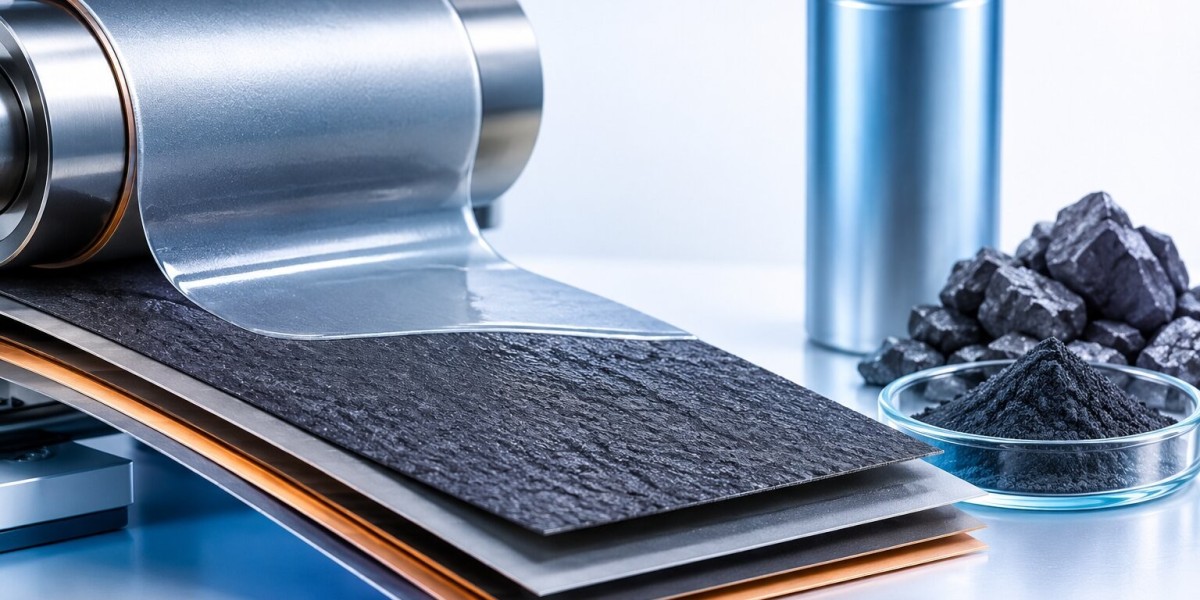

The global battery anode prelithiation market is gaining attention as battery manufacturers seek ways to improve lithium-ion battery energy density, efficiency, and performance. The growing use of silicon-based anode materials is creating demand for prelithiation technologies, which compensate for lithium consumed during a battery's first charging cycle.
The market was valued at USD 124.8 million in 2025 and is projected to reach USD 1.24 billion by 2035, registering a CAGR of 25.8% during 2026–2035. Rising electric vehicle production, investment in advanced battery materials, and demand for higher-capacity energy storage solutions are supporting this growth.
Browse Full Report Here:- https://www.faradexpartners.com/reports/anode-prelithiation
Market Overview and Growth Drivers
Anode prelithiation is a process that introduces additional lithium into an anode before battery assembly or formation cycling. It helps replace lithium lost during the formation of the solid electrolyte interphase layer, particularly in silicon-based anodes.
Silicon has a higher theoretical lithium storage capacity than conventional graphite, making it attractive for next-generation lithium-ion batteries. However, silicon anodes can experience considerable first-cycle capacity loss. Prelithiation helps compensate for this loss and improves the amount of lithium available for normal battery operation.
According to Faradex Partners, prelithiation can improve first-cycle Coulombic efficiency in silicon-graphite composite anodes from approximately 85–93% to 97–99.5%, depending on the material and process.
The commercialization of silicon-graphite composite anodes is a major driver. Battery producers are exploring higher silicon content to increase energy density and electric vehicle driving ranges. Investment in next-generation battery research is also encouraging manufacturers to evaluate prelithiation.
Technology Developments and Market Opportunities
Manufacturers are developing different prelithiation methods to improve lithium distribution, process consistency, safety, and compatibility with existing electrode production lines.
Electrochemical prelithiation introduces lithium through an electrochemical process. It can support controlled lithium distribution across the electrode and is being explored for integration into advanced battery manufacturing.
Stabilized lithium metal powder (SLMP) is another approach. A protective coating helps reduce the powder's reactivity, and the material may be mixed into anode slurry or applied to electrode surfaces. Lithium foil contact transfer and lithium vapour deposition are also being explored for specific applications.
These methods offer options for different electrode compositions and production requirements. As silicon-based anodes gain commercial use, scalable prelithiation processes could become more important.
For further details about market developments, forecasts, and industry opportunities, explore the Battery Anode Prelithiation Market Report.
Market Restraints and Challenges
Despite its growth potential, the market faces technical and operational challenges. One major concern is the handling of metallic lithium, which reacts with moisture and oxygen. Manufacturers may need controlled environments, specialized storage, and additional safety procedures, increasing infrastructure and operating costs.
Production scalability is another challenge. Some prelithiation methods add processing stages or require additional time, potentially affecting manufacturing throughput. Companies must integrate these processes without disrupting high-volume electrode production.
The cost of specialized materials and equipment can also influence adoption. Manufacturers need to balance improvements in battery performance with material expenses, process reliability, and production efficiency. Research, automation, and process optimization will be important in addressing these barriers.
Discover More Market Insights:- https://www.faradexpartners.com/
Market Segmentation
The battery anode prelithiation market can be categorized by method, anode type, application, and region.
By Prelithiation Method:
- Electrochemical Prelithiation
- Stabilized Lithium Metal Powder (SLMP) Direct Addition
- Lithium Foil Contact Transfer
- Lithium Vapour Deposition
Electrochemical prelithiation allows controlled lithium introduction, while SLMP can be incorporated through slurry mixing or surface application.
By Anode Type:
- Silicon-Graphite Composite Anodes
- Pure Silicon Anodes
- Graphite Anodes
Silicon-graphite composites are a key segment because they combine silicon's capacity potential with graphite's established use in lithium-ion batteries. Pure silicon anodes also represent an opportunity as manufacturers work to manage first-cycle losses and improve performance.
Regional Market Outlook
Asia Pacific is an important market because of its extensive lithium-ion battery manufacturing base. China has a large network of battery producers and anode material suppliers, while Japan and South Korea contribute through battery research, materials development, and automotive supply chains.
North America benefits from battery research funding, electric vehicle investment, and companies developing silicon-based anode materials. The United States is also an important centre for research and commercialization of advanced battery technologies.
Europe is investing in local battery production and next-generation materials, while stronger regional supply chains could support demand. Other regions may offer opportunities as electric mobility develops.
Request For Customization:- https://www.faradexpartners.com/customise-report/anode-prelithiation
Competitive Landscape
The competitive environment includes battery material developers, technology companies, and established battery manufacturers. Companies associated with advanced anode materials and battery development include:
- Group14 Technologies
- Sila Nanotechnologies
- Amprius Technologies
- Samsung SDI
- BTR New Material
- SK Nexilis
- SES AI
- NanoGraf
- Enovix Corporation
- Livent / Arcadium
Industry participants are focusing on anode performance, manufacturing scalability, and materials for next-generation lithium-ion cells. Partnerships may further support commercialization.
Future Outlook
The outlook for the battery anode prelithiation market is closely linked to the adoption of silicon-rich anodes and the development of higher-energy lithium-ion batteries. As manufacturers seek improved capacity and efficiency, processes that compensate for initial lithium loss may become more relevant.
Progress in electrochemical methods, stabilized lithium materials, and production-line integration could address cost and scalability challenges. Investment in electric vehicles and energy storage may create opportunities for technology developers and suppliers.
Conclusion
The battery anode prelithiation market is developing alongside advances in silicon-based anodes and next-generation lithium-ion batteries. Demand for higher energy density, ongoing battery research, and electric vehicle production are creating opportunities for manufacturers and technology providers. Improvements in safety, cost, and production scalability will influence how quickly these technologies achieve wider adoption.
About Faradex Partners
Faradex Partners provides market research and industry intelligence across battery technologies, raw materials, manufacturing, energy storage, and related supply chains. Its research supports businesses, investors, and industry professionals seeking insights into market developments and emerging opportunities.
Related Links:- https://www.blogger.com/profile/02814299499624092316