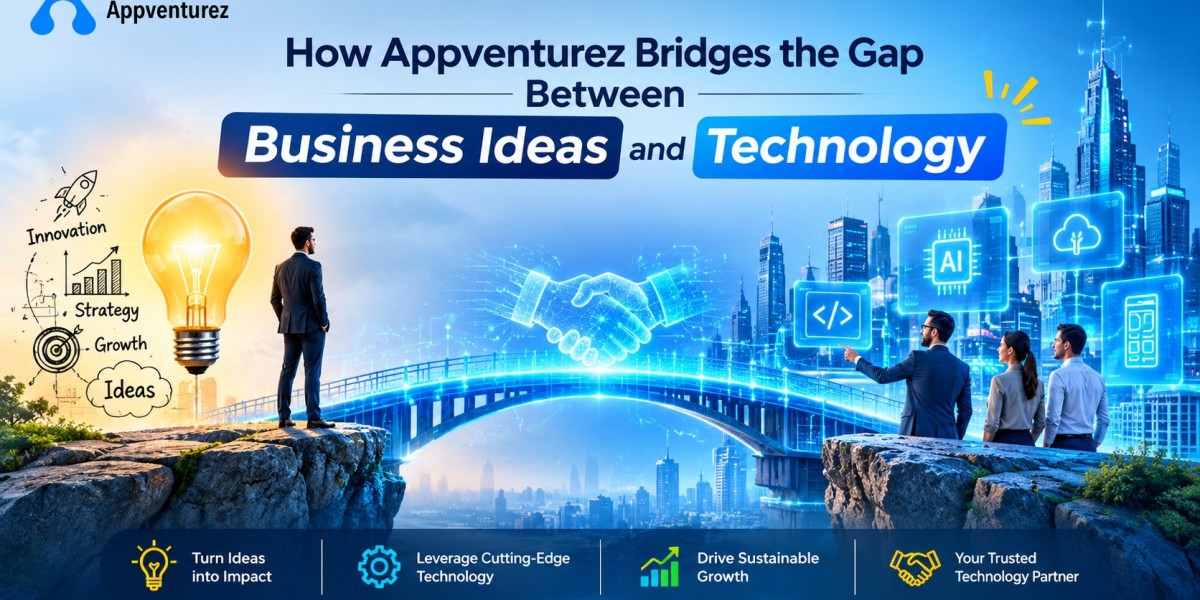

Every successful product begins as an idea in someone's head: a faster way to book appointments, a smarter way to track deliveries, an app that makes a tedious job pleasant, a platform that connects two sides of a market. The idea is usually clear to the person who had it. The distance between that idea and a working, reliable, scalable product is where most of them get lost.
The gap is real. Business people think in customers, revenue, and outcomes. Engineers think in architectures, APIs, and trade-offs. Neither side is wrong, but they speak different languages, and the translation between them is where requirements get misunderstood, budgets drift, timelines slip, and finished products miss the point. A founder says "I want an app like that, but better," and eighteen months later discovers that what they needed was a simpler workflow, a different platform, or a smaller first release.
A good technology partner closes that gap. It listens for the business problem behind the feature request, translates it into a clear plan, challenges assumptions with evidence, builds in small proven steps, and stays accountable for results after launch. Appventurez is a software development company that builds mobile, cloud, AI, IoT, wearable, and enterprise solutions tailored to different industries, with an emphasis on scalable, secure, and business-oriented applications. This article explains how a partner like Appventurez approaches the journey from idea to product, using mobile and Android development as a running example, and what businesses can do to get the most from it.
Why Good Ideas Fail to Become Good Products
Before looking at the bridge, it helps to understand the gap.
The idea is a solution in disguise: "We need an app" may hide the real need, which could be faster ordering, fewer calls, or better visibility
Requirements are vague or shifting: What is in the founder's head never makes it fully onto paper
Assumptions go untested: Teams build for imagined users instead of real ones
Scope balloons: Every stakeholder adds a feature, and the first release becomes enormous
Technology is chosen too early or for the wrong reasons: Fashionable stacks, mismatched platforms, or tools the team already knows
Business and engineering never really meet: Handoffs replace conversation
No success measures: Nobody agrees on what "working" means
Launch is treated as the finish line: Real learning, and real problems, begin after release
Each of these is a translation failure. Closing the gap means building a repeatable process for translating between business intent and technical execution.
The Bridge: How an Idea Becomes a Product
The journey below reflects how experienced partners structure the path from idea to working product. Each stage reduces a specific risk.
Stage 1: Listen for the Problem Behind the Idea
The first conversation is about the business, not the technology.
What this involves:
Understanding who the customers are, what they struggle with, and how the business makes money
Asking why the idea matters now, and what happens if nothing is built
Separating the problem ("customers cannot find available slots") from the proposed solution ("a booking app")
Identifying constraints: budget, timeline, regulation, existing systems, and skills
Learning the vocabulary of the industry, so conversations stay precise
Why it matters: Ideas expressed as features often hide a different underlying need. Getting to the real problem early prevents expensive detours.
Stage 2: Validate the Idea Before Building It
The cheapest way to build the right product is to learn what customers want before writing production code.
What this involves:
Talking to real users and observing how they work today
Reviewing competitors and alternatives, including non-software options
Testing demand with low-cost experiments, such as prototypes, landing pages, or limited pilots
Defining measurable success criteria: adoption, retention, revenue, cost, or time saved
Being honest when the evidence is weak, and reshaping or stopping the idea
Why it matters: A candid "this will not work as described, but this version might" is worth far more than an eager yes.
Stage 3: Translate the Idea Into a Clear Product Definition
This is the heart of the bridge: converting intent into something both business and engineering can act on.
What this involves:
A product vision statement: who it is for, what problem it solves, and why it is better than alternatives
User personas and journeys that show how people will actually use the product
A prioritized backlog of features, ranked by value, effort, and risk
Clear acceptance criteria for each feature, so "done" is unambiguous
A definition of the minimum viable product: the smallest release that delivers real value and real learning
A roadmap that shows what comes after the first release, with decision points
Why it matters: Shared artifacts, such as journeys, prototypes, and acceptance criteria, replace assumptions with something everyone can see.
Stage 4: Design the Experience, and Test It
Before engineering effort is committed, the experience is designed and tested with users.
What this involves:
Wireframes and clickable prototypes that stakeholders can touch
Usability testing with target users, followed by revisions
A design system for consistent components, typography, and interaction patterns
Accessibility considerations from the start
Platform-appropriate design for Android, iOS, and web, following each platform's conventions
Why it matters: Finding a confusing flow in a prototype costs hours. Finding it in shipped code costs weeks.
Stage 5: Choose the Right Technology, for the Right Reasons
Technology serves the idea, not the other way around.
What this involves:
Weighing native, cross-platform, and web approaches against user needs, budget, and feature requirements
Selecting cloud, backend, data, and integration technologies that fit the product's scale and team
Deciding what to build, what to buy, and what to configure
Considering security, privacy, compliance, and maintainability
Explaining trade-offs in plain language, so decision-makers can choose with confidence
Keeping the architecture as simple as the problem allows, with a clear path to scale
Example: A business whose customers are mostly on Android devices may begin with a native Android app built with modern tools, such as Kotlin and Jetpack Compose, and a cloud backend that can later serve an iOS app and web client.
Stage 6: Build in Small, Visible Steps
Agile delivery keeps the idea and the product connected throughout development.
What this involves:
Short iterations that end with working software
Regular demos, so stakeholders see progress and correct course early
A visible backlog that can be reprioritized as learning arrives
Cross-functional teams that include design, engineering, and quality assurance
Transparent reporting on progress, budget, and risks
Early warnings when something is going wrong
Why it matters: The idea is tested against reality every few weeks, instead of surfacing as a surprise at the end.
Stage 7: Build Quality, Security, and Scalability In
A product that works only in the demo is not finished.
What this involves:
Automated testing, code review, and continuous integration
Testing on real devices and under realistic conditions, which is especially important for Android's wide range of models and OS versions
Security by design: authentication, encryption, access control, and secure handling of data
Performance, accessibility, and reliability as requirements
Modular architecture and clean APIs, so the product can grow
Observability, such as logging, crash reporting, and monitoring
Stage 8: Launch Deliberately
A careful launch protects both users and reputation.
What this involves:
Staged rollouts and limited releases before wide availability
App store preparation and compliance with platform policies
Support readiness and clear communication to users
Monitoring of stability, performance, and user feedback from day one
A rollback plan for the unexpected
Stage 9: Learn, Measure, and Improve
Launch begins the most valuable phase: learning from real use.
What this involves:
Product analytics to see what users actually do
Comparison of results to the success criteria defined at the start
A/B tests and experiments to improve conversion and engagement
Prioritized improvements informed by data and feedback
Retirement of features that nobody uses
Ongoing maintenance, updates for new OS versions and policies, and technical debt reduction
Stage 10: Scale the Product and the Partnership
As the product proves itself, the engagement evolves.
What this involves:
Expansion to new platforms, markets, and features, guided by evidence
Adding capabilities such as AI chatbots, personalization, analytics, and IoT integrations where they create value
Scaling the team up or down as the roadmap changes
Shifting engagement models, for example from a fixed-price MVP to a dedicated team and a support agreement
Capabilities That Make the Bridge Strong
A partner needs breadth, so that the right tool is available for each stage of the journey. The service areas below are the ones Appventurez works in.
Mobile Application Development
For many business ideas, the phone is the product.
Native Android and iOS development, plus cross-platform approaches where they fit
Customer-facing apps, employee and field-service apps, and enterprise mobility
Integration with payments, maps, CRM, ERP, and third-party services
Release management, crash monitoring, and ongoing maintenance
Cloud, Backend, and Integration
Scalable backends and APIs
Cloud-native architecture and DevOps
Integration with existing systems and data sources
AI, Machine Learning, and NLP
Predictive analytics, recommendations, and personalization
NLP for documents, search, and sentiment
AI chatbots and virtual assistants grounded in business knowledge, with guardrails and human handoff
IoT, Wearables, and Connected Products
Device connectivity and fleet management
Smartwatch and wearable apps
Real-time monitoring, alerts, and edge intelligence
Enterprise and Custom Software
Workflow automation and internal tools
Customer and partner portals
Multi-tenant platforms, marketplaces, and dashboards
Bridging the Gap in Mobile and Android Products
Mobile products show clearly how an idea becomes a product, and why the choice of partner matters so much.
The Typical Android Journey
Idea: A business wants an app that lets customers book, pay, and track services
Validation: Interviews and a clickable prototype reveal that customers mostly want fast rescheduling and clear status updates
Definition: The MVP focuses on three journeys, booking, rescheduling, and live status, rather than a dozen features
Design: Material Design patterns, accessible layouts, and tested flows
Technology: A native Android app with a cloud backend, designed so iOS and web can follow
Build and test: Short sprints, automated tests, and verification on a representative set of real devices
Launch: A staged rollout on the Play Store with crash monitoring
Learn and grow: Analytics guide the roadmap, adding payments, notifications, an AI chatbot for support, and an iOS app
Why Android Needs Special Care
Device fragmentation: Thousands of models, screen sizes, and manufacturer customizations
Platform change: Regular OS updates that alter permissions, background behavior, and policies
Store requirements: Play Store rules that evolve and can affect distribution
Dependency drift: Third-party SDKs and libraries that change or are deprecated
Quality sensitivity: App ratings respond quickly to crashes, slowness, and missing features
Choosing an Android Partner Wisely
When comparing an Android app development company, an Android application development company, or an Android mobile app development company, look beyond the quote.
Live apps with strong, stable ratings and regular updates
Fluency in modern Android engineering and testing practices
Backend, cloud, and API capability, not only the app layer
A discovery process that starts with your business problem
Honest estimates, stable teams, and clear communication
A maintenance plan and response times for after launch
References from long-term clients
Whether you are reviewing the top Android app development companies on a list or searching for the best Android app development company for your needs, treat rankings as a starting point and verify through references, live apps, and a pilot. A good Android app development agency will help you reduce scope intelligently, not simply sell you more.
Android App Development Services Across the Idea-to-Product Journey
Professional Android app development services cover the whole path.
Product discovery, validation, and MVP planning
UI/UX design and prototyping
Native Android development
Backend and API development
Integration with business systems and third-party services
Quality assurance across real devices and OS versions
Play Store release support
Ongoing maintenance, monitoring, and updates
Feature enhancement, experimentation, and optimization
Custom Android app development services make sense when the app is central to your business, needs deep integration with your systems, or must differentiate your offering. For simpler needs, a lighter approach may deliver the same value for less, and a trustworthy partner will tell you so.
Engagement Models That Keep Business and Technology Aligned
How you work together shapes how well the bridge holds.
Discovery and strategy engagement: A short, fixed-scope phase to validate the idea, define the product, and plan the roadmap
Fixed-price MVP: For well-defined first releases
Time and materials: For evolving scope and exploratory work
Dedicated team: A stable team that works as an extension of yours, ideal for ongoing roadmaps
Staff augmentation: Specialists who join your internal team
Managed services and support: Ongoing monitoring, maintenance, and improvement after launch
Many businesses combine these: a discovery phase, a fixed-price MVP, then a dedicated team for the roadmap and a support agreement for operations.
What Businesses Can Do to Make the Bridge Stronger
Bridges are built from both sides.
Bring the Problem, Not Just the Solution
Share the business context: customers, goals, constraints, and what success looks like. A well-explained problem is worth more than a detailed feature list.
Assign a Clear Owner
Name a business owner with real authority and availability. Projects without one drift.
Be Honest About Constraints
Budget, timeline, legacy systems, and internal politics all shape the solution. Surprises cost more than candor.
Start Smaller Than You Think
A focused MVP builds trust, reveals problems cheaply, and creates momentum.
Involve Real Users Early
Put prototypes in front of the people who will use the product. Adoption is decided long before launch.
Stay Engaged During Development
Attend demos, give feedback quickly, and make decisions promptly. Slow decisions are a hidden cost.
Own Your Assets
Keep repositories, cloud accounts, designs, and documentation under your ownership from day one.
Measure Outcomes
Agree on metrics up front, and review them regularly with your partner.
Plan for Life After Launch
Budget for maintenance, monitoring, and continuous improvement, not only the build.
Why Many Businesses Choose India for Turning Ideas Into Products
India has become one of the world's largest hubs for software and mobile development, and many founders and enterprises build their products with partners there.
Skilled Engineering Talent
India produces thousands of engineers every year with expertise in mobile development, cloud platforms, data engineering, AI, and embedded systems.
Cost-Effective Development
Compared to North America and Europe, businesses can significantly reduce development costs while maintaining high-quality standards, which stretches an early-stage budget further.
A Mature Ecosystem
India hosts thousands of technology companies, which is why many businesses search for an Android app development company in India or an Android app development agency in India when planning a new mobile product.
Flexible Engagement Models
Businesses can choose from:
Dedicated development teams
Fixed-price projects
Hourly hiring
Staff augmentation
Offshore development centers
Global Project Experience
Indian companies work with clients across the US, UK, Europe, Australia, and the Middle East, making them familiar with international compliance expectations and agile project management.
Things to Manage in Offshore Partnerships
Time zone differences, communication habits, and cultural expectations need attention. Agree on overlapping working hours, regular meetings, shared tools, and clear documentation from the start, and favor partners with strong experience serving international clients.
How to Evaluate Any Idea-to-Product Partner, Including Appventurez
Use this checklist when comparing providers.
Genuine interest in your business problem before technology
Willingness to challenge your idea and recommend simpler or different approaches
A discovery and validation process, not just a quote
Live products they built and maintained, with strong ratings and regular updates
Strong engineering practices: code review, automated testing, CI/CD, and security
Design capability, including prototyping and usability testing
Breadth across mobile, cloud, AI, IoT, and integration, as your roadmap requires
Transparent estimates, with assumptions and a lifecycle cost view
Stable teams and open communication, including bad news
Clear ownership of code, accounts, and data
Post-launch support and a plan for continuous improvement
References from long-standing clients
Ask to see relevant case studies, speak with existing clients, meet the people who would do the work, and begin with a focused discovery phase or MVP.
Common Reasons the Gap Stays Open
Starting with a solution instead of a problem
Skipping validation, then building for imagined users
Trying to build everything in the first release
Choosing technology before understanding needs
Treating the partner as a pair of hands, not a source of challenge and advice
Poor decision-making speed on the business side
No agreed success measures
Choosing a partner on price alone
Neglecting maintenance and platform updates
Declaring victory at launch
Future Trends in Idea-to-Product Development
The path from idea to product continues to get shorter, and these trends are worth watching.
Key trends include:
AI-assisted prototyping and development speeding up early stages, with human judgment still essential
Low-code and no-code tools for simple internal needs, with custom engineering for differentiators
AI features becoming standard in products, such as chatbots, personalization, and smart automation
Continuous experimentation and feature flags reducing the cost of being wrong
Platform engineering and automation lowering the cost of building and running software
Stronger expectations around privacy, security, and responsible AI
Wearables, voice, and connected devices extending product experiences
Outcome-based engagement models with technology partners
Founders and enterprises that master problem framing, validation, and phased delivery will benefit most from these advances.
Conclusion
The distance between a business idea and a working technology product is not measured in lines of code. It is measured in understanding: of the real problem, the real users, the real constraints, and the real trade-offs. The partners who close that gap do so by listening before building, validating before investing, translating intent into shared artifacts, delivering in small visible steps, building in quality and security, and staying accountable after launch.
Appventurez brings mobile, cloud, AI, IoT, wearable, and enterprise engineering together in an approach designed to turn business ideas into scalable, secure, and measurable products, with flexible engagement models that range from discovery workshops to dedicated teams and ongoing support. As with any partner, the right next step is to test the fit: review relevant case studies, speak with existing clients, meet the team, and begin with a focused engagement. India continues to stand out as a destination for software and mobile development, offering strong engineering talent, cost-effective delivery models, and deep experience serving global clients.
Whether your idea is an Android app, an AI-powered assistant, a connected product, or a platform that connects a market, the path is the same: start with the problem, prove it small, build it well, and let evidence guide how far and how fast it grows.