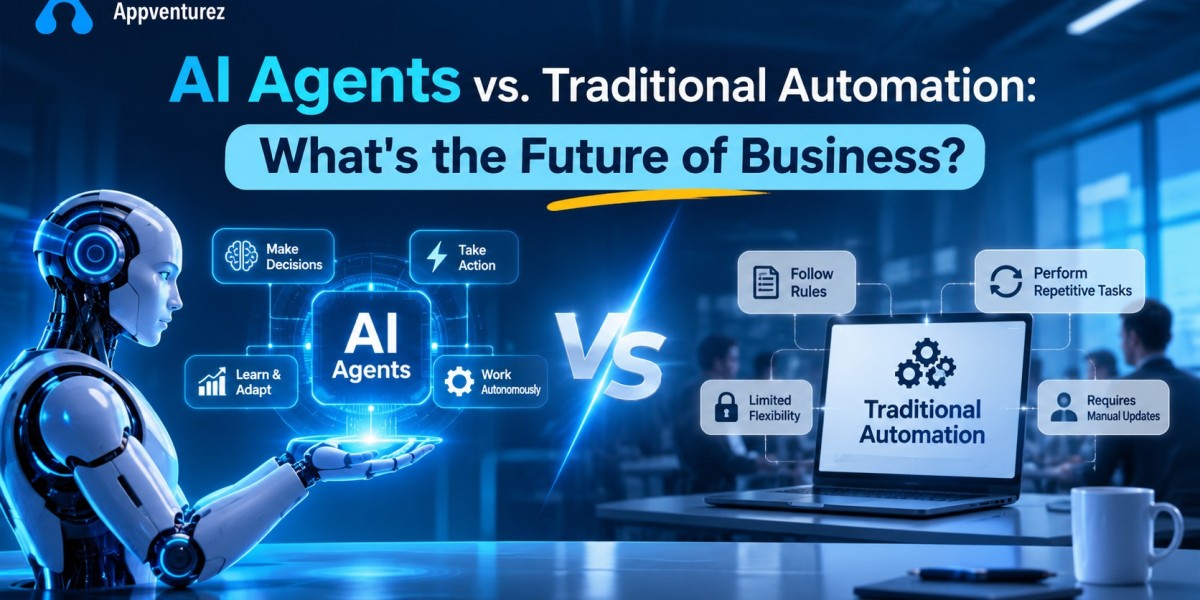

A chatbot answers questions. An AI agent gets things done.
That difference is the heart of the next wave of business automation. Earlier tools could respond to a message, classify a ticket, or suggest a reply. AI agents go further: given a goal, they can plan a sequence of steps, use tools such as your CRM, helpdesk, calendar, and payment systems, check their own results, and carry the task through to completion, escalating to a person when they hit something they should not decide alone. Ask an agent to resolve a refund request and it can look up the order, check the policy, issue the refund within its limits, update the record, and write the customer a clear confirmation.
For customer support, sales, and operations teams that are chronically stretched, this is a significant shift. Work that used to bounce between systems and people can move end to end in minutes. But agents also raise the stakes. A system that can act can also act wrongly, and the more tools it can use, the more carefully its permissions, guardrails, and oversight must be designed.
This guide explains what AI agents are, how they differ from chatbots and traditional automation, how they can transform support, sales, and operations, what it takes to build and run them safely, how mobile, Android, and wearable devices extend their reach, and how to choose a development partner. Companies like Appventurez build mobile, cloud, AI, IoT, and wearable solutions, and the principles below apply to any team you work with.
Note: AI agent technology, tooling, and pricing change very quickly, and results vary by business, data quality, and implementation. Use this article as a planning framework, and validate any approach with a focused pilot before scaling.
What Is an AI Agent?
An AI agent is a software system that uses an AI model, typically a large language model, to pursue a goal by reasoning about what to do, taking actions through tools, observing the results, and adjusting.
The Core Ingredients
A model: The reasoning engine that interprets goals and decides next steps
Instructions and policies: The role, rules, tone, and limits the agent must follow
Tools: Connections to systems the agent can use, such as CRM, helpdesk, order management, knowledge bases, calendars, email, and payment or billing systems
Knowledge: Retrieval over company documents, policies, product data, and history, so answers are grounded
Memory and context: Conversation history and relevant customer or case information
Planning and control: Logic for breaking goals into steps, checking progress, and deciding when to stop or ask for help
Guardrails: Permissions, validation, and approval rules that limit what the agent may do
Observability: Logs and traces of what the agent did and why
Chatbot vs. Workflow Automation vs. AI Agent
Rule-based chatbot: Follows scripts and menus. Predictable but rigid
LLM chatbot: Understands natural language and answers questions. Flexible, but mostly talks rather than acts
Workflow automation or RPA: Executes fixed steps reliably, but cannot interpret variation
AI agent: Interprets a goal, chooses among tools and steps, handles variation, and completes multi-step tasks, within guardrails
Levels of Autonomy
Assist: The agent drafts or recommends, and a person decides and acts
Act with approval: The agent prepares actions and a person approves them
Act within limits: The agent acts autonomously inside defined boundaries, such as refunds under a set amount, with monitoring and escalation
Orchestrate: Multiple specialized agents coordinate, with human oversight
Most successful deployments start at the lower levels and move up as measured reliability earns trust.
Transforming Customer Support
Support is often the first and most natural home for agents. Volumes are high, many requests are repetitive, and the systems needed to resolve them already exist.
What Agents Can Do
Resolve routine requests end to end: Order status, address changes, cancellations, returns, refunds, password resets, plan changes, and billing questions
Answer product and policy questions grounded in the knowledge base, with sources
Triage and route complex cases to the right team with a clear summary and relevant history
Draft replies for human agents to review and send
Summarize long conversations and update case notes automatically
Detect urgency and sentiment to prioritize frustrated or high-value customers
Proactively notify customers about delays, outages, and renewals
Support multiple languages and channels: Web chat, mobile apps, messaging, email, and voice
Assist human agents in real time with suggested answers, next steps, and compliance reminders
How the Work Changes
Customers get faster answers at any hour, including during spikes
Human agents spend less time on repetitive tasks, and more on complex, emotional, or high-value cases
Knowledge improves, because gaps and wrong answers are surfaced and fixed
Quality becomes more consistent, since policies are applied the same way each time
Metrics to Watch
Resolution rate without human help, and the quality of those resolutions
First-response and resolution time
Customer satisfaction for agent-handled and human-handled cases
Escalation rate and reasons
Cost per resolved contact
Error and complaint rates, including incorrect refunds or promises
Design Essentials for Support Agents
Clear limits, such as maximum refund amounts and topics the agent must always escalate
Authentication before sharing account data or taking account actions
Easy, visible handoff to a human, with full context so customers never repeat themselves
Honest disclosure that the customer is talking to an AI
Grounding in current policies, with a plan for when information is missing or conflicting
Transforming Sales
Sales teams spend a surprising amount of time on administration, research, and follow-up. Agents can take on much of this, so people spend more time with buyers.
What Agents Can Do
Qualify inbound leads through conversation, asking relevant questions and scoring fit
Respond instantly to inquiries and book meetings directly into calendars
Research accounts and contacts, compiling relevant news, context, and talking points
Personalize outreach and follow-ups, with human review for quality and compliance
Update the CRM automatically from calls, emails, and meetings
Prepare proposals and quotes from templates and product data, for approval
Prompt next best actions, such as stalled deals or renewal risks
Support onboarding and handoff to customer success
Analyze pipeline and forecast risk with explanations
How the Work Changes
Fewer leads fall through the cracks
Response times drop from hours to seconds
Representatives start each conversation better prepared
Data quality improves because logging happens automatically
Managers see clearer, more current pipeline pictures
Metrics to Watch
Speed to lead and meeting-booking rate
Lead-to-opportunity conversion
Rep time spent selling versus administering
CRM data completeness
Pipeline accuracy and win rate
Complaints or unsubscribes from automated outreach
Design Essentials for Sales Agents
Respect consent, privacy, and anti-spam rules in each market, and keep humans accountable for outbound communication
Avoid invented facts: ground claims in verified product and pricing data
Set limits on discounts, commitments, and contract terms
Keep a clear audit trail of what was sent and why
Transforming Business Operations
Operations teams in finance, HR, procurement, logistics, IT, and compliance manage processes that cross many systems. Agents shine at stitching those systems together.
What Agents Can Do
Finance and accounting: Process invoices, match them to orders and receipts, flag discrepancies, chase approvals, and prepare reconciliations
Procurement: Compare quotes, check contracts, and prepare purchase requests
HR and internal services: Answer policy and benefits questions, support onboarding, schedule interviews, and handle routine requests
IT and security operations: Triage tickets, reset access within policy, gather diagnostics, and summarize incidents
Supply chain and logistics: Monitor shipments, flag delays, rebook carriers, and update customers
Compliance and risk: Review documents against checklists, flag exceptions, and assemble evidence for audits
Reporting and analysis: Pull data from systems, produce summaries, and explain changes
Field and IoT operations: Interpret equipment alerts, open work orders, and guide technicians
How the Work Changes
Cross-system tasks that took days of handoffs complete in minutes
Exceptions are surfaced with context, rather than buried in queues
Employees stop acting as human middleware between systems
Audit trails improve, since every step is logged
Metrics to Watch
Cycle time and straight-through processing rate
Error and rework rates
Cost per transaction or case
Exception volume and resolution time
Employee satisfaction and time freed
Compliance findings
Design Essentials for Operations Agents
Least-privilege access: give the agent only the permissions each task needs
Approval steps for payments, access changes, and other sensitive actions
Reconciliation checks and anomaly detection on the agent's own work
Segregation of duties and clear audit logs
Mobile, Android, and Wearable: Putting Agents in People's Hands
Agents are most useful when they reach people where they work and live. Mobile apps and wearables extend them beyond the desk.
Why Mobile Matters for Agents
Customers expect support and sales interactions in the apps they already use
Field teams, drivers, and technicians need agents that guide tasks on site, including offline
Managers want to approve actions and review summaries from anywhere
Notifications let agents bring decisions and exceptions to the right person at the right time
Phone sensors such as the camera and microphone enable document capture, image recognition, and voice
Android for Agent-Powered Experiences
Android's reach across devices, price points, and regions makes it a major channel for customer and workforce apps.
Conversational interfaces: In-app chat and voice that connect to agent back ends
On-device AI: Smaller models for speech, vision, and quick actions, with cloud agents for heavier reasoning
Device diversity: Testing across a representative set of real devices and OS versions
Permissions and privacy: Clear consent for camera, microphone, and location
Enterprise management: Mobile device management, single sign-on, and role-based access
Offline resilience: Sensible behavior when connectivity is poor
Platform changes: Regular OS and Play Store updates that affect background work and permissions
Businesses looking for an Android app development company to bring AI agents to customers and employees should look for teams that combine native Android skill with AI, cloud, and integration capability. A strong Android application development company or Android mobile app development company will treat the app as part of an end-to-end workflow.
When comparing options, including the top Android app development company or top Android app development companies named on any list, or searching for the best Android app development company for your needs, treat rankings as a starting point and verify through references, live apps, and a pilot. A good Android app development agency will advise honestly on what the agent should do in the app, what should happen in the cloud, and what should always involve a person.
Android app development services typically include discovery and design, native Android development, backend and API work, agent and AI integration, quality assurance on real devices, Play Store release support, and ongoing maintenance. Custom Android app development services make sense when the app is central to the customer or workforce experience and needs deep integration with your systems. Many businesses also consider an Android app development company in India or an Android app development agency in India for cost-efficient delivery, with data-handling and security expectations agreed up front.
Wearables and Smartwatches: Agents on the Wrist
Wearables add a different kind of value: glanceable, hands-free, always-on interaction.
Where Wearables Fit With AI Agents
Instant alerts and approvals: A manager approves a purchase request or acknowledges an incident from a smartwatch
Hands-free field support: Technicians and warehouse staff receive prompts and confirm steps by voice or tap while their hands are busy
Voice requests: Short commands to an agent, such as logging a visit, checking an order, or reporting a problem
Contextual nudges: Reminders tied to location, schedule, or sensor data
Safety and wellness signals: Worker-safety alerts or wellness prompts, with careful attention to privacy, consent, and regulation
Customer-facing experiences: Delivery updates, appointment reminders, and quick replies on the wrist
Wearable Design Constraints
Tiny screens and brief interactions: Information must be short, clear, and actionable
Battery and processing limits: Heavy reasoning belongs in the phone or cloud, with the watch as a lightweight interface
Connectivity patterns: Watches often depend on a paired phone or on intermittent connections
Privacy sensitivity: Health and location data require clear consent and strong protection
Platform differences: Wear OS, watchOS, and other platforms have distinct capabilities and guidelines
Notification discipline: Too many alerts quickly become noise
Choosing a Wearable Development Partner
Businesses exploring agent-enabled wearable experiences often search for a wearable app development company, a wearable mobile app development company, a smartwatch app development company, or a wearable app development agency, and many consider a wearable app development company in India or a wearable app development agency in India for cost efficiency. When comparing providers, look for:
Shipped wearable or smartwatch apps, with references you can speak with
Experience with Wear OS, watchOS, and Bluetooth device integration
Skill in designing for small screens and brief interactions
Capability across the whole chain: companion mobile app, backend, and AI integration
Strong privacy and security practices for personal and health-related data
Testing on real devices, since emulators cannot reproduce sensors and battery behavior
Stable teams, transparent estimates, and clear ownership of code and accounts
Wearable app development services and wearable application development services commonly include discovery and UX design for small screens, smartwatch and companion-app development, sensor and device integration, cloud and AI integration, testing on real hardware, and ongoing maintenance. Custom wearable app development services, wearable mobile app development services, and smartwatch app development services make sense when the wearable experience is central to the product. Companies that want to extend an existing team can hire wearable app developers as a dedicated team or through staff augmentation, and should ask about shipped projects, platform expertise, and how the developers will work with their own engineers.
How to Build and Run AI Agents Responsibly
Because agents act, they deserve extra engineering care.
1. Start With a Narrow, Valuable Scope
Choose one workflow with clear volume, clear rules, available data, and recoverable errors, such as order-status and returns support, or lead qualification and meeting booking.
2. Define Boundaries Explicitly
What the agent may do, may not do, and must always escalate
Monetary and data limits
Which systems and records it may touch
Required approvals and who gives them
3. Ground the Agent in Verified Knowledge
Use retrieval over current policies, product data, and customer records, with access controls that respect user permissions. Prefer citing sources, and define behavior for missing or conflicting information.
4. Design Tools Carefully
Give each tool a narrow purpose, clear inputs, and validation
Prefer read-only access where possible
Make risky actions reversible or approval-gated
Log every tool call
5. Keep Humans in the Loop
Confidence thresholds and risk rules that trigger escalation
Easy handoff with full context
Review queues for sampled and high-risk actions
Clear accountability for outcomes
6. Defend Against Attacks and Misuse
Prompt injection: Content from emails, web pages, and documents can contain hidden instructions. Treat external content as untrusted, and separate it from instructions
Data leakage: Enforce user-level permissions on retrieval, and filter outputs
Excessive agency: Limit permissions and chain length, and require approvals for sensitive steps
Abuse and fraud: Rate limits, authentication, and anomaly detection
7. Evaluate Before and After Launch
Build test sets from real conversations and cases, including hard and adversarial ones
Measure task success, accuracy, safety, tone, and cost, not only fluency
Run in shadow mode, comparing agent decisions with human ones
Use A/B tests and staged rollouts
Re-run evaluations whenever models, prompts, or tools change
8. Monitor, Audit, and Improve
Trace each run: inputs, reasoning summaries, tool calls, and outcomes
Track resolution, escalation, error, satisfaction, latency, and cost
Review failures weekly, and update knowledge, prompts, tools, and rules
Watch for model and data drift
9. Control Cost and Latency
Use smaller models for simple steps, and larger ones for hard reasoning
Cache and reuse results where safe
Limit steps and context length
Monitor cost per resolved task, not just cost per request
10. Plan for Governance and Compliance
Document purpose, data use, limits, and oversight
Align with applicable privacy, consumer-protection, and sector rules, and with recognized AI risk frameworks
Be transparent with customers and employees about when AI is involved
Architecture at a Glance
A typical agent system includes these layers.
Channels: Web chat, mobile apps, messaging, email, voice, and wearables
Orchestration layer: The logic that manages conversations, planning, tool use, and escalation
Model layer: One or more language models, accessed through APIs or hosted privately, behind a clean interface so they can be swapped
Knowledge layer: Document stores, vector search, and databases, with access control
Tool and integration layer: Secure connectors to CRM, helpdesk, ERP, payments, calendars, and internal APIs
Safety and policy layer: Validation, permissions, approvals, and content filters
Observability layer: Logging, tracing, evaluation, and dashboards
Admin and analytics: Tools for business teams to review conversations, update knowledge, and track results
Keeping these layers modular makes the system easier to test, secure, and evolve.
Cost Considerations
Costs vary widely, so request detailed estimates for your own project. Key drivers include:
Scope and number of workflows and integrations
Data and knowledge preparation
Model usage fees, which scale with conversation length and volume
Infrastructure and observability
Security, privacy, and compliance work
Evaluation and testing effort, which is substantial for agents
Mobile and wearable development, including Android, iOS, and smartwatch apps
UX design and change management
Team size and location
Monitoring, tuning, and maintenance after launch
Because agent costs grow with usage, estimate cost per resolved task at your expected volume and at ten times that volume. A focused pilot is the best way to learn real costs and benefits before scaling.
Risks and Common Mistakes
Starting too broad: Trying to automate everything at once
Giving agents too much access: Broad permissions turn small errors into big incidents
Weak grounding: Agents that invent policies, prices, or facts
No human handoff: Customers trapped in loops
Skipping evaluation: Launching on demos instead of test sets and shadow mode
Ignoring prompt injection and data leakage
Measuring deflection instead of resolution and satisfaction
Overpromising autonomy to stakeholders or customers
Neglecting monitoring, so silent failures persist
Underestimating ongoing cost
Locking into one model provider with no way out
No clear owner for the agent after launch
Why Many Businesses Choose India for AI Agent and App Development
India has become one of the world's largest hubs for software, mobile, AI, and wearable development, and many businesses build agent-enabled products with Indian partners.
Skilled Engineering Talent
India produces thousands of engineers every year with expertise in machine learning, mobile development, cloud platforms, data engineering, and embedded systems.
Cost-Effective Development
Compared to North America and Europe, businesses can significantly reduce development costs while maintaining high-quality standards.
Strong Technology Ecosystem
India hosts thousands of technology companies offering AI consulting, Android and iOS development, wearable development, and enterprise integration.
Flexible Engagement Models
Businesses can choose from:
Dedicated development teams
Fixed-price projects
Hourly hiring
Staff augmentation
Offshore development centers
Global Project Experience
Indian companies work with clients across the US, UK, Europe, Australia, and the Middle East, making them familiar with international compliance expectations and agile project management.
Things to Manage in Offshore Work
Cross-border data-transfer rules, hosting location, access controls, and contractual protections deserve special attention, particularly when agents touch customer or personal data. Confirm where data resides and who can reach it, involve legal and security teams, and agree on overlapping working hours and clear documentation from the start.
How to Choose an AI Agent Development Partner
Agents or conversational systems running in production, with references and measured results
Honest advice on when an agent is the right tool and when simpler automation wins
Strong engineering across backend, integration, mobile, and, where relevant, wearables
Evaluation rigor: test sets, shadow mode, and monitoring of task success and safety
Security and privacy discipline, with clear answers on data handling, third-party AI services, and prompt-injection defenses
Architecture that keeps models swappable and tools tightly permissioned
Human-in-the-loop design and clear escalation behavior
Transparent pricing, including usage fees and a cost-per-task view
Stable teams and open communication
Clear ownership of code, prompts, evaluation sets, accounts, and data
Post-launch support and continuous improvement
Begin with a paid pilot, and keep ownership of your repositories and accounts from day one.
Why Choose Appventurez for AI Agent and Mobile Solutions?
Editor's note: This section describes Appventurez's services in general terms. Add verified case studies, measurable results, and certifications from your own records before publishing.
When businesses want AI agents that work inside real products and workflows, they need a partner who combines AI expertise with strong mobile and cloud engineering. Appventurez is a trusted software development company offering innovative mobile, cloud, AI, IoT, and wearable solutions tailored to different industries.
The company focuses on delivering scalable, secure, and business-oriented applications that help organizations automate workflows, improve customer engagement, and make smarter decisions. From NLP and AI chatbots to agent-style assistants, predictive analytics, and recommendation engines, Appventurez builds the intelligence along with the Android and iOS apps, wearable and smartwatch experiences, dashboards, cloud backends, and system integrations that put it to work, with flexible engagement models including dedicated teams and ongoing support.
By leveraging modern frameworks, cloud technologies, AI capabilities, and agile methodologies, Appventurez aims to design every solution for long-term scalability, seamless integration, strong security, and measurable business outcomes. As with any provider, evaluate them against the criteria in this guide: ask for relevant case studies, probe their evaluation and security practices, speak with long-standing clients, and begin with a focused pilot.
Future Trends
Multi-agent systems in which specialized agents coordinate on complex workflows, with human supervision
Standard ways for agents to connect safely to tools, data, and other agents
Voice-first and multimodal agents that see, hear, and speak
Smaller, efficient models running on phones and wearables for fast, private actions
Stronger evaluation, observability, and guardrail tooling
Growing regulation and governance of autonomous AI systems
Agents embedded directly in business software, mobile apps, and connected devices
Outcome-based pricing for agent-handled work
Greater emphasis on security against prompt injection and tool misuse
Frequently Asked Questions
How is an AI agent different from a chatbot?
A chatbot mainly converses. An agent pursues a goal by planning steps and using tools, such as looking up orders, updating records, or booking meetings, within guardrails.
Are AI agents safe to use with customers?
They can be, with narrow scope, strict permissions, grounding in verified knowledge, human handoff, evaluation, monitoring, and clear disclosure that the customer is talking to AI.
Will agents replace support and sales teams?
Mostly they take over routine and administrative work, freeing people for complex, relational, and high-value tasks, though roles and skills will change.
Where should we start?
Pick one workflow with clear rules, available data, and recoverable errors, run it in shadow mode, then pilot with real users and measure.
Do agents need a mobile app or wearable?
Not always, but mobile and wearables extend their reach to customers, field teams, and managers, especially for approvals, alerts, and hands-free tasks.
How do we keep costs under control?
Use smaller models for simple steps, cache where safe, limit steps and context, and track cost per resolved task.
How do we avoid vendor lock-in?
Own your repositories, prompts, and evaluation sets, keep model access behind a clean interface, and require documentation and transition support.
Conclusion
AI agents move automation from answering to acting. In customer support they resolve requests end to end. In sales they qualify, research, schedule, and keep records current. In operations they stitch together systems that people used to connect by hand. The value is real, and so are the risks: an agent that can act can also act wrongly, so scope, permissions, grounding, evaluation, monitoring, and human oversight matter as much as the model itself.
The businesses that benefit most start narrow, keep people in control, measure resolution and satisfaction rather than deflection, and expand as evidence earns trust. Mobile, Android, and wearable experiences carry agents into the places where customers and employees actually are. India continues to stand out as a destination for software, mobile, AI, and wearable development, offering strong engineering talent, cost-effective delivery models, and deep experience serving global clients. By partnering with an experienced development company like Appventurez, businesses can build scalable, secure, and future-ready agent solutions tailored to their specific goals.
Whether you want an AI agent that resolves support cases, one that keeps your pipeline moving, one that connects your back-office systems, or one that taps a technician's wrist when something needs attention, the path is the same: start small, protect what works, measure honestly, and let evidence decide how far autonomy goes.